Was at a certain tech company for a meeting today. Saw this in a conference room on the way to the bathroom. Probably wasn’t supposed to be taking a picture, but couldn’t resist.
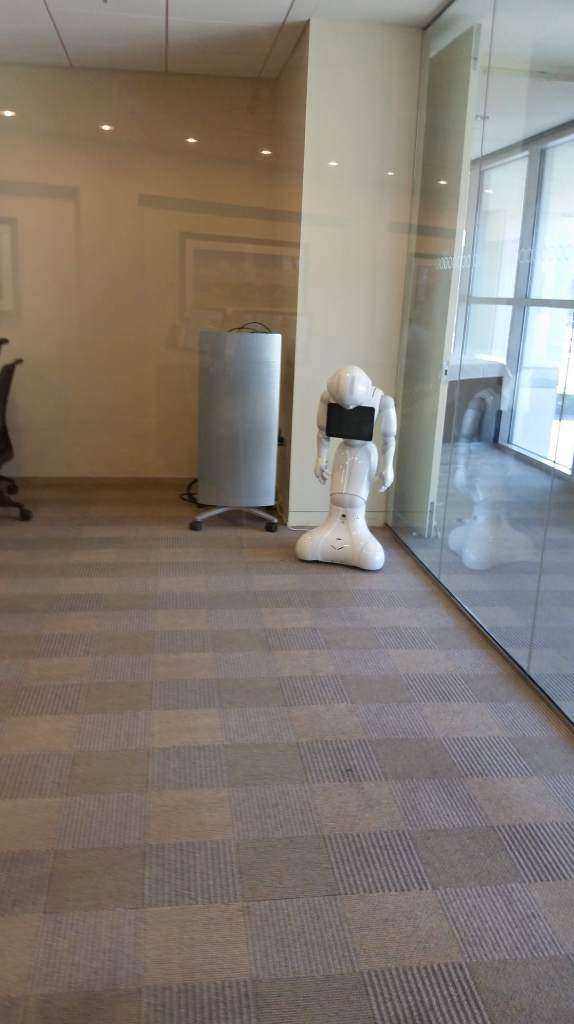
Was at a certain tech company for a meeting today. Saw this in a conference room on the way to the bathroom. Probably wasn’t supposed to be taking a picture, but couldn’t resist.
Realized my wife’s old Shuttle PC has a 10 year old processor. Was time to upgrade. Starting looking at mini-ATX and Micro-ATX and other small form factors. Then I ran across the Intel NUC. Bought some DRAM (laptop variety) and slapped the old SSD in and Windows 10 booted. We will see how it goes, but so far, so good.


Was talking to my Mom last night. Our conversation drifted to her uncle who had been killed in WW II. We weren’t really that close to her side of the family, so I don’t think I ever knew much about him. His name was Roy Charles MacPherson and was her father’s brother. He was in the Merchant Marines in WW II on a ship named the Dorchester. It was torpedoed of Greenland on Feb 3, 1943 and 675 of the over 900 men on board died, mostly of hypothermia in the North Sea.
Reading up on all of this I came across one interesting bit. The American writer Jack Kerouac was on the Dorchester and left just before the last voyage. I wonder he he and Roy ever met.
The American writer Jack Kerouac served on Dorchester, where he befriended an African-American cook named “Old Glory,” who died when the ship sank after the torpedo attack. Kerouac would have also been on the ship during the attack, but for a telegram he received from coach Lou Little, asking him to return to Columbia University to play football.[23]
Had some leftover cabbage and cauliflower. Decided to try some pickling / kraut. Oh yeah, had some fennel too. Should be interesting.

Ran across this article in the IEEE Spectrum. I am a big fan of Rodney Brooks, but what really got me was the illustrations by Chris Philpot.
The Rodney Brooks Rules for Predicting a Technology’s Commercial Success
A few key questions will help you distinguish winners from losers

Adding to the last posting (The Most Contentious Election in US History) I ran cross the history of the Redeemers. A good read on how the south ended up with Jim Crow even after the 13th, 14th and 15th amendments. It also uses the term “Corrupt Bargain” for the deal that ended the election of 1876. Things I never learned in school. Of course, I went to school in the Deep South.
 Was reading Robert Penn Warren‘s 1961 “The Legacy of the Civil War” written on the centennial of the start of the US Civil War. Robert Penn Warren is a three time Pulitzer Prize winner, one for fiction (“All the King’s Men”) and two for poetry. One of my favorite writers. I was curious what this southerner had to say a half a decade ago about the divide in the US and how things might have changed. One thing I ran across was the Presidential election of 1876, which sounds strangely familiar. The sad part of the story is Reconstruction ended as part of the deal to swing this election. From the Wiki:
United States presidential election, 1876
The United States presidential election of 1876 was the 23rd quadrennial presidential election, held on Tuesday, November 7, 1876. It was one of the most contentious and controversial presidential elections in American history, and is known for being the catalyst for the end of Reconstruction. Republican nominee Rutherford B. Hayes faced Democrat Samuel Tilden. After a controversial post-election process, Hayes was declared the winner.
…
To date, it remains the election that recorded the smallest electoral vote victory (185–184) and the election that yielded the highest voter turnout of the eligible voting age population in American history, at 81.8%.[1][2] It was also the first presidential election since 1856 in which the Democratic candidate won the popular vote.
The compromise which settled this election was called The Compromise of 1877. Warren keeps referring to it in his book as the “Big Sell Out”, but that may be his own term, since Google doesn’t show up anything on one. The result, according to Wiki was “By 1905, most black men were effectively disenfranchised by state legislatures in every southern state.”
From the Washington Post Wonkblog:
Step aside Edison, Tesla and Bell. New measurement shows when U.S. inventors were most influential.

Some of the most interesting tech news I have seen in a long time. I was expecting Apple to do this first (oddly, Apple uses the same naming convention for their ARM chips). Breaks the stranglehold Intel has on the server market.
New – EC2 Instances (A1) Powered by Arm-Based AWS Graviton Processors
 Steven A. Guccione