I am a strong believer in backing up my files. Unfortunately I’m not as organized about it as I would like. It doesn’t help that my main desktop machine is a Raspberry Pi 4 running Ubuntu and my wife’s is a Windows 10 PC that has been in constant operation for literally decades. I also found some old backups of my kids files on an old USB drive.
i decided to spin up my old Shuttle Linux box as a NAS, or really just a place for my backups. It has an old 2 TB HDD that is perfect for the job. I started by rsyncing my home directory from the Pi over to the Shuttle. Then I could use one of my old USB HDD drives for backing up the NAS. I have a couple of 1 TB USB HDDs I was using for backups and then there is the 4 TB HDD I was using for the Pi before I went to SSD.
My plan is to put everything on the NAS, with rsync scripts to automate the backup of home directories. Then another rsync script to save the NAS to the USB HDD, just to be safe.
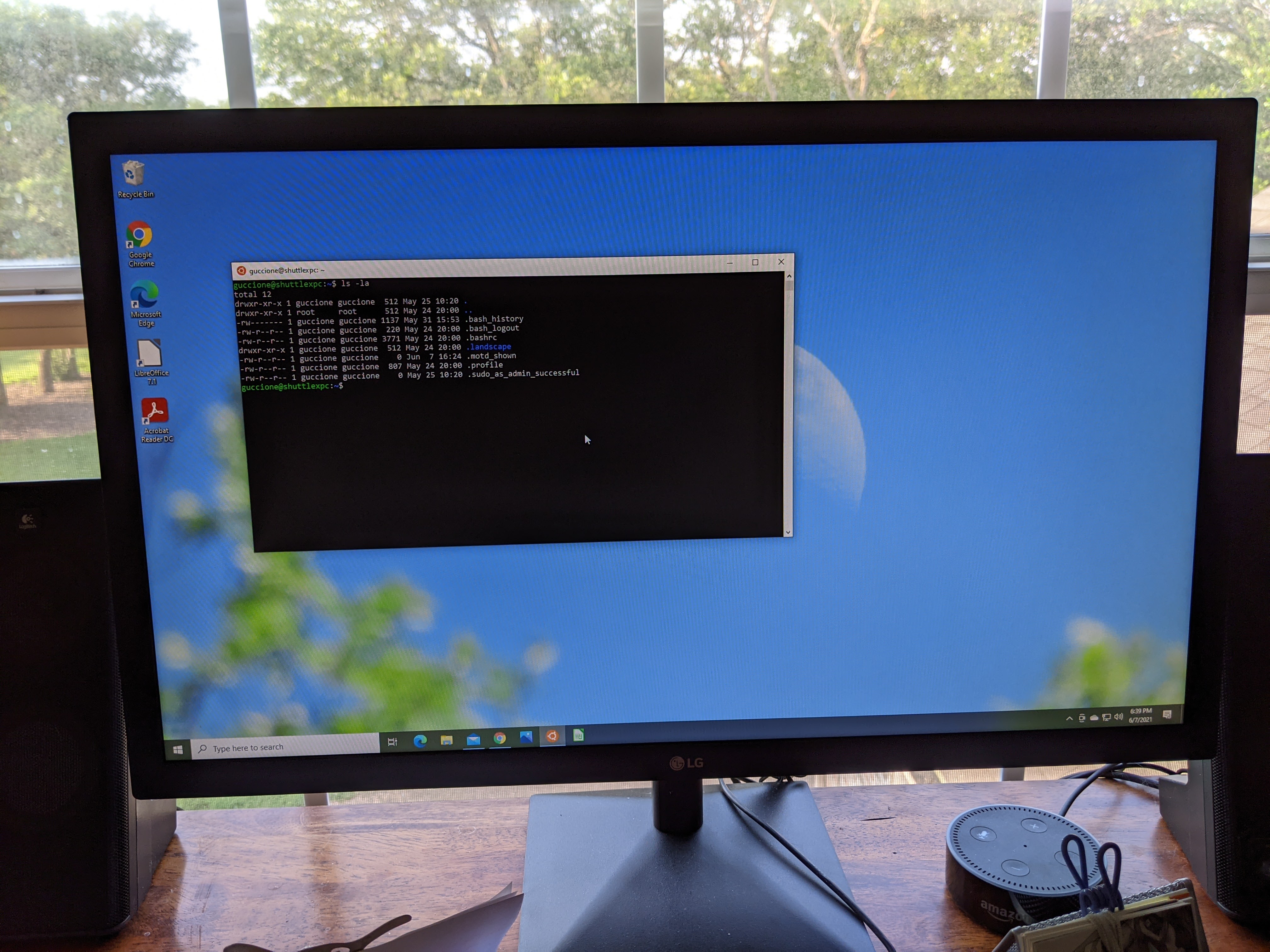
Only hitch was the Windows PC. I just cleaned it up with a new install. There are a few 3rd party rsync applications, but wasn’t crazy about them. I used to use Cygwin. Is that still around? Maybe. Then I read about this Ubuntu on Windows, in a sort of VM, I suppose. Gave it a try and was quicker and easier than just about anything I have ever tried to do on windows. Now I have rsync, and everything else. Pops up a nice little bash shell window like a native Windows app. No more need to mess around with PowerShell either.



 Steven A. Guccione