Banning Grid Storage in Texas

I read about this but did not believe it. ERCOT, which manages the Texas Electric Grid, is looking to ban batteries from the grid. My understanding is that batteries and similar storage are the future. They store power from renewables (currently wind and solar) to use when these renewables aren’t producing. They also have the effect of smoothing the crazy gyrations in pricing on the grid. This seems to be the core of the “problem”.

Today when the sun goes down, and before the evening wind kicks in, there is a “duck bill” lull in renewable energy generation. In the Texas system, this leads to an increase in wholesale electricity prices, which until recently was exclusively served by oil gas and coal. This summer, with capacity tight, I have watched rates go from a few tens of dollars to hundreds of even thousands of dollars per kilowatt hour. A huge bonanza for legacy “thermal” power generation.

Today batteries are starting to supply power during the duck bill hours, usually from power stored earlier in the day when it was plentiful and cheap. What’s not to like? Well, nothing, unless you own a gas or coal fired plant. Batteries are said to pay for themselves in 18 months, making them a great investment and encouraging rapid adoption. They are now accounting for a measurable part of the power on the grid, especially in the early evenings.

I spent my career in tech. I’ve seen this sort of “disruption” many times. I see “thermal” electric generation technology as dead men walking. But these people have enormous political power in Texas. Will cleaner, cheaper, more reliable renewable power displace “thermal”? I think it is inevitable. The only question is how much pain will be inflicted on Texas consumers as this dying portion of the energy industry is propped up politically.

A good article from the Texas Energy and Power Newsletter.

Is ERCOT attempting to “eighty-six” batteries?

Gas and Coal Outages Behind ERCOT’s Constant Calls for Conservation

Getting a bit predictable, if not tedious. Saw this news is several outlets. Only one tried to blame The Windmills. From the Austin Chronicle.

It also seems ERCOT is voting Thursday to ban storage (batteries) from the grid. My understanding is batteries are doing a good job filling in the “duck bill” that occurs when the sun goes down and wind hasn’t picked up. Seems like a naked gift to oil and gas, at the expense of everyone who uses electricity.

Gas and Coal Outages Behind ERCOT’s Constant Calls for Conservation

How To Be Lucky

I am undeniably a lucky person. Always have been. When I was younger, I resented it a bit, because I felt like much of the time my hard work and accomplishments were written off by friends and family as luck. And they may have been right. As J. R. “Bob” Dobbs once said, (and I paraphrase) I would rather be lucky than smart. From Sapient Capital.

How To Be Lucky

Induction Cooking and Temperature Control

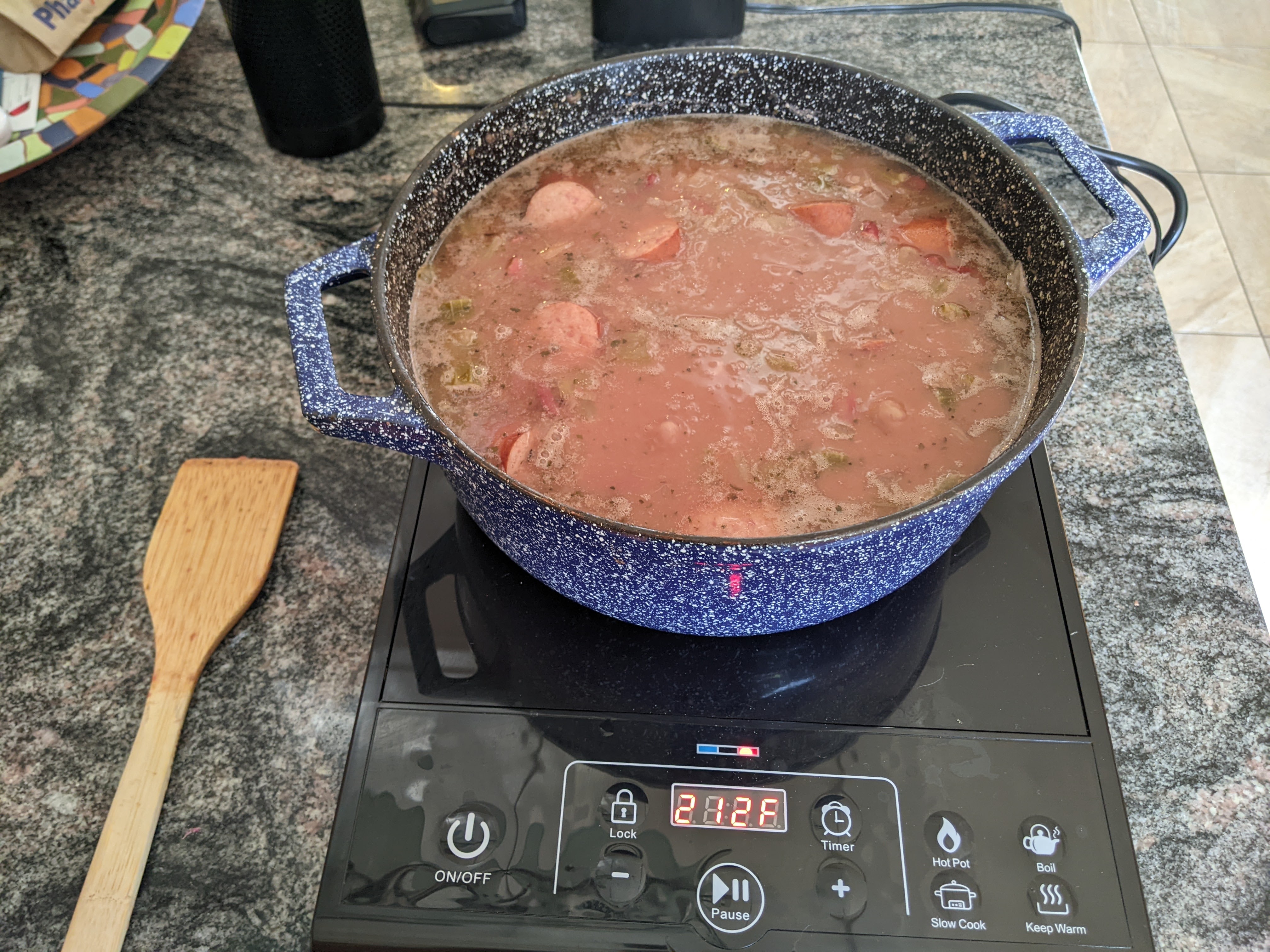
I made some red beans with the induction cooker yesterday. I have had a hard time articulating why this is such a better way to cook. I never took to the Instant Pot. You can’t stir easily and can’t see what is going on inside. It also isn’t good for cooking off liquids.

The induction cooker is pleasant in that you aren’t bombarded with a blast of heat from the stove flame every time you get near the pot. And all that heat isn’t heating up the house and driving up the air conditioning bills, at least in the summer.

After some use it is clear that the real advantage is actual temperature control. With a gas stove you control the size of the flame, but the flame is always the same temperature. If you have a heavy pot it (sorta) spreads out the heat. But a long slow cook for something like red beans needs lots of stirring and you still get burning and sticking on the bottom. With the induction cooker you are literally setting the temperature of the bottom of the pot. This sort of control is great but a bit novel and took some getting used to. By the way, this induction cooktop only has like six different settings. Enough I suppose but more would be better. I can see maybe 25F increments as being useful.

US Money Laundering

I spent the end of my career doing tech work for some large financial services firms. Everyone had to do regular money laundering training. Basically how to spot it and what to do about it if you saw it. All of this was aimed at low level, cash transactions. It was also mentioned that US real estate was the primary vehicle for large scale money laundering worldwide. The basic reason was the ability to hide ownership in real estate.

Of course, all this money sloshing around was good for people in real estate and, truth be told, in the finance sector. And I suppose the economy at large, though I’m not really so sure that any of these ill gotten billions ever really trickled down to middle and lower class Americans in any form.

This law is long overdue. But, if done correctly, this will lead to serious declines in high end and commercial real estate. It will be interesting to see what effect enforcing such anti-money laundering laws will have.

US set to unveil long-awaited crackdown on real estate money laundering