LED Lighting and the Energy Transition

I am using a couple of lightbulbs for the test load for my solar testbed. I was using either one or two standard bulbs which consume maybe 10W each. Not much of a load really. I started looking around for something a little bigger and realized there wasn’t much that you can run 24 / 7 that uses much electricity. I happened to have two old incandescent bulbs that weigh in at 60W or so each and they are about the best I can do.

Funny thing is the 10W LED bulb puts out about as much light as the old 60W incandescent. That’s significant. It certainly makes things like home solar much easier to manage. The idea of “keeping the lights on” isn’t such a big deal. The next step, I suppose, is keeping the A/C (or heat) on.
Wilhoit’s Law

Just ran across something called Wilhoit’s Law. Misattributed but I found it in the comments on the Crooked Timber posting below. Funny I used to read Crooked Timber many years ago but it fell off my radar. My take is it’s all State Capitalism by other names.

Conservatism consists of exactly one proposition, to wit: There must be in-groups whom the law protects but does not bind, alongside out-groups whom the law binds but does not protect.

Frank Wilhoit

Silicon Valley’s worldview is not just an ideology; it’s a personality disorder.

Solar Power and Angles

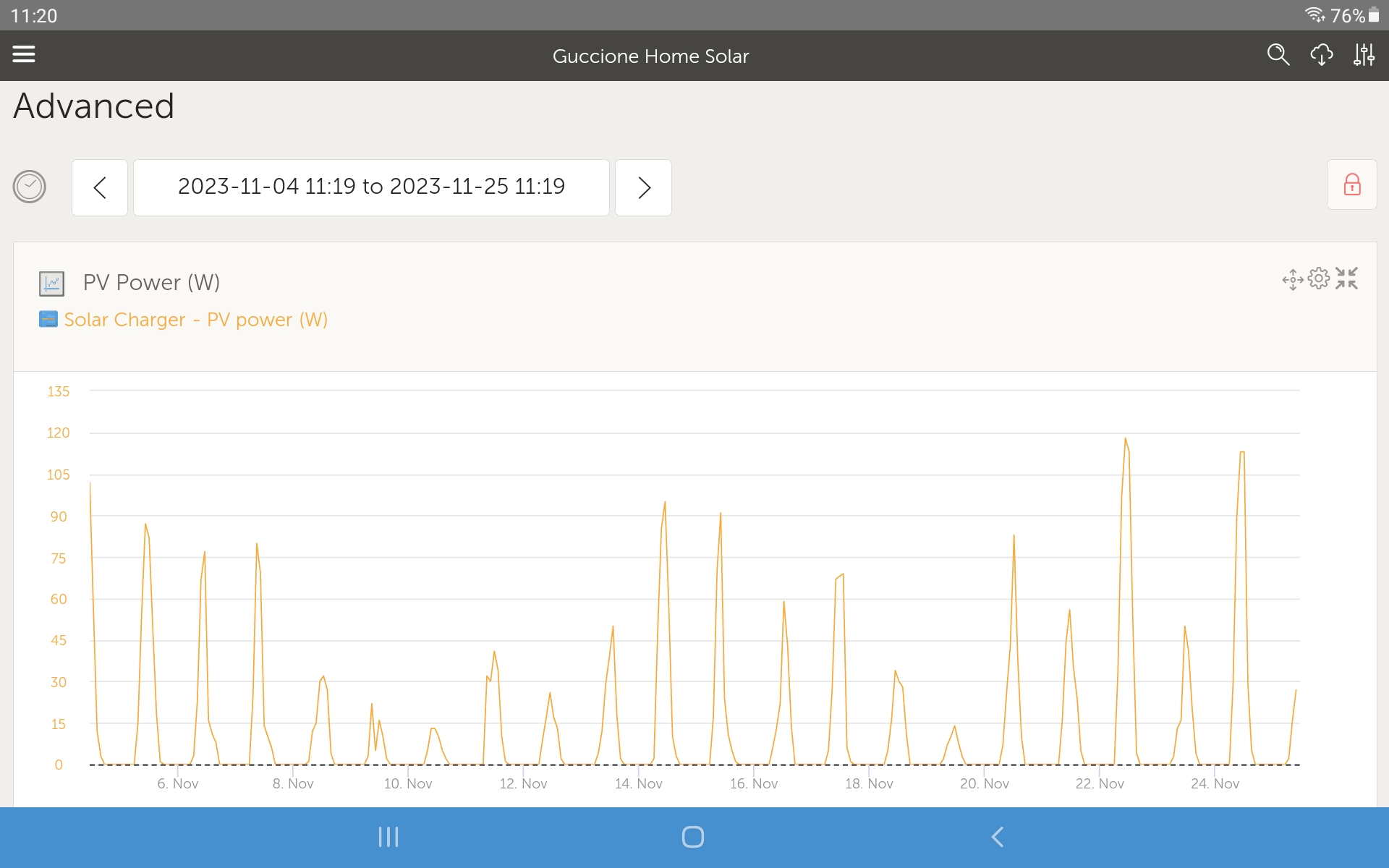
Below is a graph of the recent output of the solar testbed from the Victron VRM. The last two large spikes are after tilting the panels. None of this was very scientific, with the angle being determined by the available size of the angle iron (five feet, cut in half for two 2.5 foot lengths). I estimate this is about a 22 degree tilt, maybe half of optimum.

Qualitatively there is a significant improvement in output, maybe by a third, on sunny days. The two large spikes are the days before and after Thanksgiving, which we’re full sun all day, with Thanksgiving being mostly cloudy.

The lessons: angle is important. Shady days will produce a bit, but full sun is where the real productivity is. Most home installations won’t have too many choices for angle and the weather is going to be even further beyond our control. But some good parameters to get a feel for.

A Better Angle

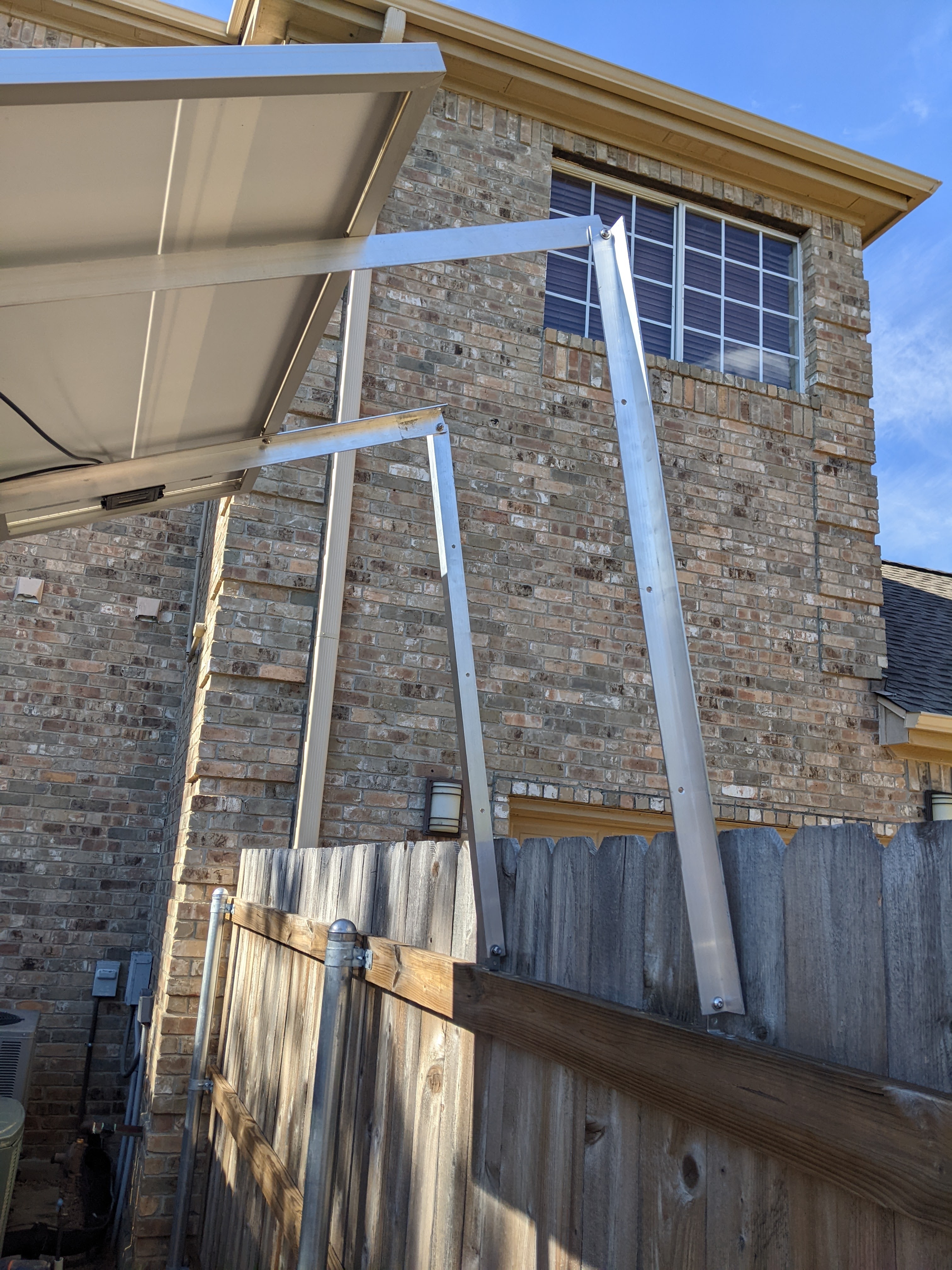
I have never really noticed how low in the sky the sun gets in winter here in Texas. With my panels laying more or less flat, the angle the sun hits the panels at is pretty low. So I decided to change the mouting to permit a change in the angle, at least in one direction.

Originally I had just attached the angle iron brackets directly to the fence with deck screws. Simple and sturdy for sure. This week I bought some brackets and two more pieces of angle iron to prop the panels up in a more southerly facing direction. I was hoping for a string of nice sunny days for a good comparison but it it looking like that isnt going to happen. But I expect a noticable change in output.

Some lessons being learned. Location is important. Right now the panels are blocked by the house (and trees) in the afternoon. I could have moved them further away from the house, and I may yet, but this used less wire and was more convenient.

I’m also getting the idea that in some old fashioned way this technology can put you in closer contact with the natural world around us. My first inclination was to think about sizing an array for absolute worst case. But maybe it is simpler to make adjustments to your lifestyle. Don’t do laundry on cloudy days. Wasn’t this how Grandma used to do it?

‘We needed to get off the grid’: New Orleans’ community-driven response to blackouts

After a history of poor performance by the privately owned power grid, the poorest New Orleanians take matters into their own hands. It was literally a matter of life and death for many. And in the end it was surprisingly easy and cost effective. A good (maybe even feel-good) read from The Guardian (UK)

‘We needed to get off the grid’: New Orleans’ community-driven response to blackouts