Interesting read and even more interesting comments. My take is still that EVs are the medium and long term future. This is more about political whipsawing in the US and corporate incompetence than any misreading of technology trends. Ask China.
Year: 2026
U.S. forecasts blizzard, polar vortex, heat dome and atmospheric river all at once
From PBS News. On top of a pretty good long term drought here in the western US.
U.S. forecasts blizzard, polar vortex, heat dome and atmospheric river all at once
American Rivers
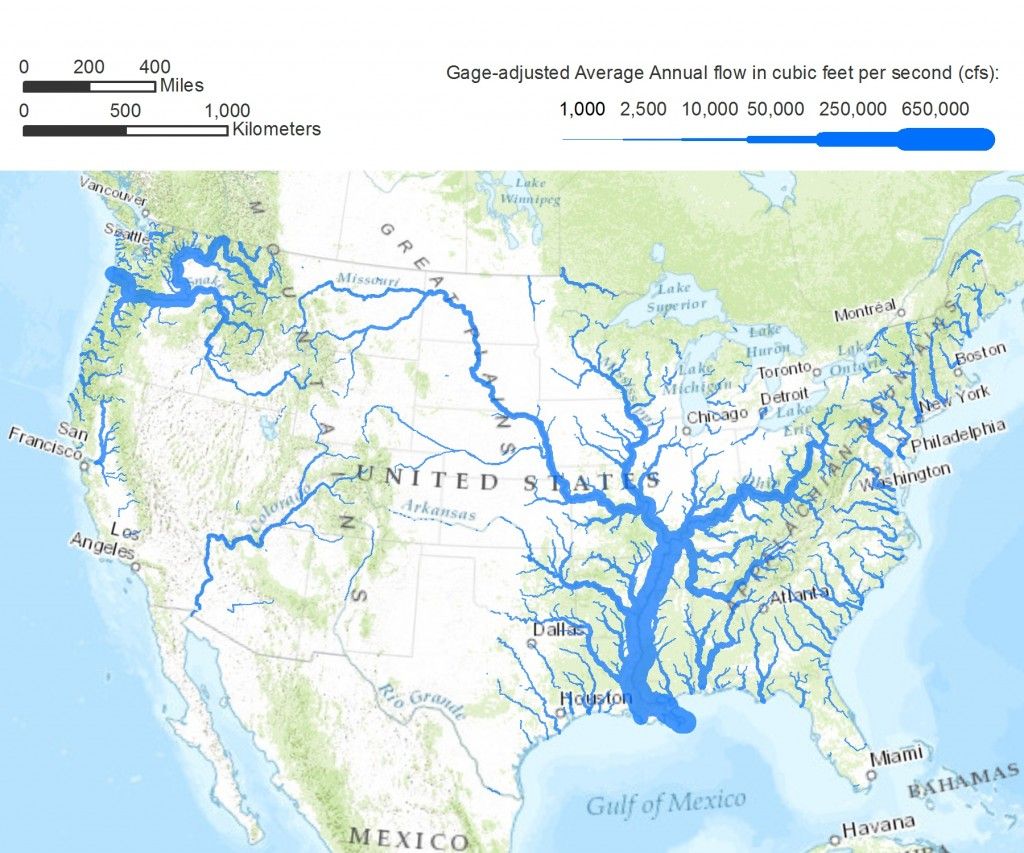
I grew up in New Orleans on the Mississippi River. The sight of the river was certainly impressive. Now that I live in the west, on the Rio Grande River, I was curious about the comparison between the two rivers. A map from The Pacific Institute shows the major rivers of the US and their relative sizes in water flow. The Rio Grande barely exists at all along the US-Mexico border. The Mississippi is indeed mighty.
What the Hell is Project Jupiter?
I’ve seen the ad on TV and wondered what they were for. I suspected a data center project. The problem here in New Mexico isn’t land, probably not electricity, but definitely water. I’m baffled at the vast sums being spent on these data centers that seem to be of questionable benefit to everyone.
A secretive ad campaign calls on New Mexicans to support controversial Project Jupiter data center
More AI Woes
I have been concerned for a while that our technology has outgrown our ability to manage it. I don’t mean large scale, although recent outages are somewhat shocking. I’m talking about small scale things. I may or may not be having (mesh) router problems. But let’s not go there, for now.
Last night I had a simpler one. Booked a flight and got the usual email from the airline. Usually it automatically takes the Gmail message and adds the flight info to my Google calendar. Not this time. Into the black hole of Reddit I dove. It was comforting to see so many other people with the same problem, but distressing to see it goes back years with little or no obvious fixes.
I’m guessing my problem is new “AI” management of these sorts of things, since it just started. I tried various settings in email and in the calendar app, resent the mail to myself. Sent a text. Tried the airline app. There were supposed to be buttons to add the flight to my calendar in all of these places, but I couldn’t find a one.
In the end I went to the airline web site and found the ICS file for my flight on the web page. ICS is the old iCalendar text format from 1998 that is still, successfully it seems, in use today. Clicked on it and BOOM! the flight was on my calendar.
Sometimes I miss the 1990s.


AI Wars
A news story I almost passed over thinking it was more about money and military contracts. It seems to be about much more.
An AI company called Anthropic has been doing business with the US government and the military. They are known as (my words) the Ethical AI Company. This is all in the name of safeguards.
The contractual requirements Anthropic has made on the US government are about refraining from using the technology in “high-stakes situations involving lethal force, sensitive information or government surveillance”.
Me, I’m guessing the problem is the one about Mass Surveillance. But I don’t know that for sure.
This is what Peter Thiels Plantir is supposedly up to. As a top Pentagon official has stated, the US military “has no interest in using AI to conduct mass surveillance of Americans (which is illegal) nor do we want to use AI to develop autonomous weapons that operate without human involvement.” So what’s the problem here?
The president has already gone maximalist and threatened civil and criminal penalties against Anthropic and demanded a full phase out of the technology.
It’s clear the government wants to use this technology for illegal purposes, is lying about it, and Anthropic isn’t playing ball. I suppose the military will be able to find someone who will play ball (Musk? Thiel?) if they haven’t already. Maybe this is really just about removing more guardrails. Maybe they are worried about an AI refusing illegal or unethical commands and perhaps even reporting them to authorities or the public.
Trump orders all federal agencies to phase out use of Anthropic technology
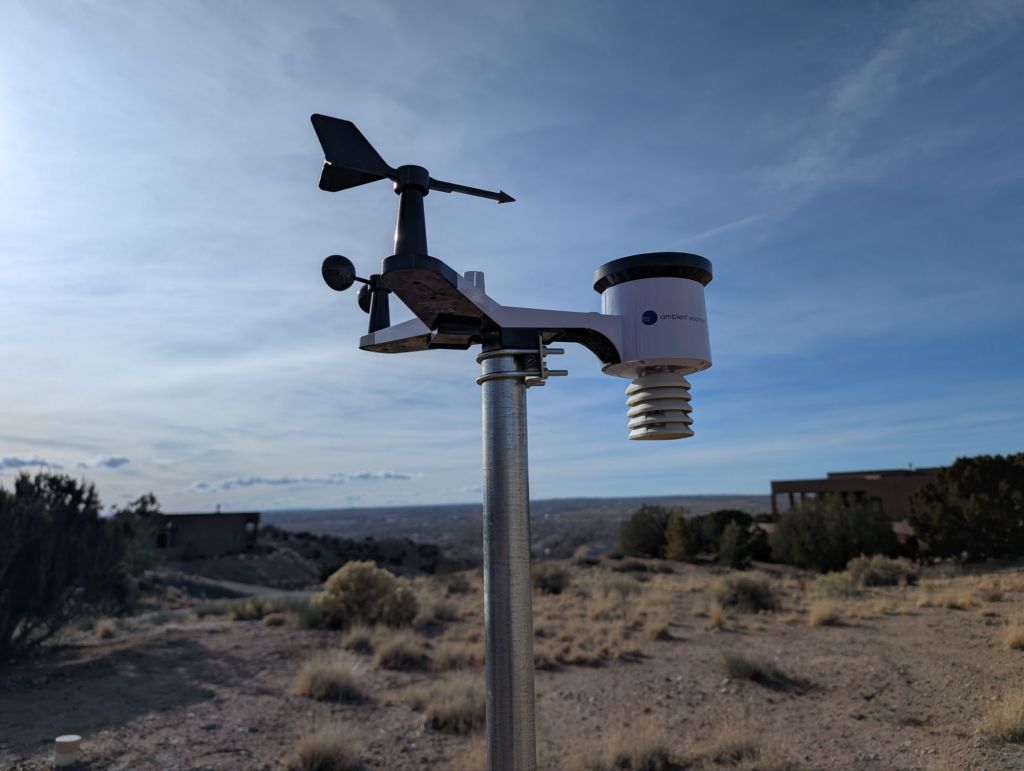
Placitas Weather Station
I put up a weather station yesterday. An Ambient Weather WS-2902. It’s live on:
Weather Underground
Ambient Weather Network
American Automakers Are Poised To Win The Country, Lose The World
I frequently post about the Energy Transition. Most of the posts come from specialized blogs and news sources. This is a bit more mainstream and quotes Bloomberg. The consensus is the US auto industry is doomed.
 Steven A. Guccione