I didn’t know there was a term for this. Basically how to be realistic and optimistic at the same time , even in bad conditions. Named for Jim Stockdale, more famous for being Ross Perot’s running mate in his 3rd party presidential bid.
Year: 2022
Terry Allen
Listening to a little West Texas / panhandle music this morning.
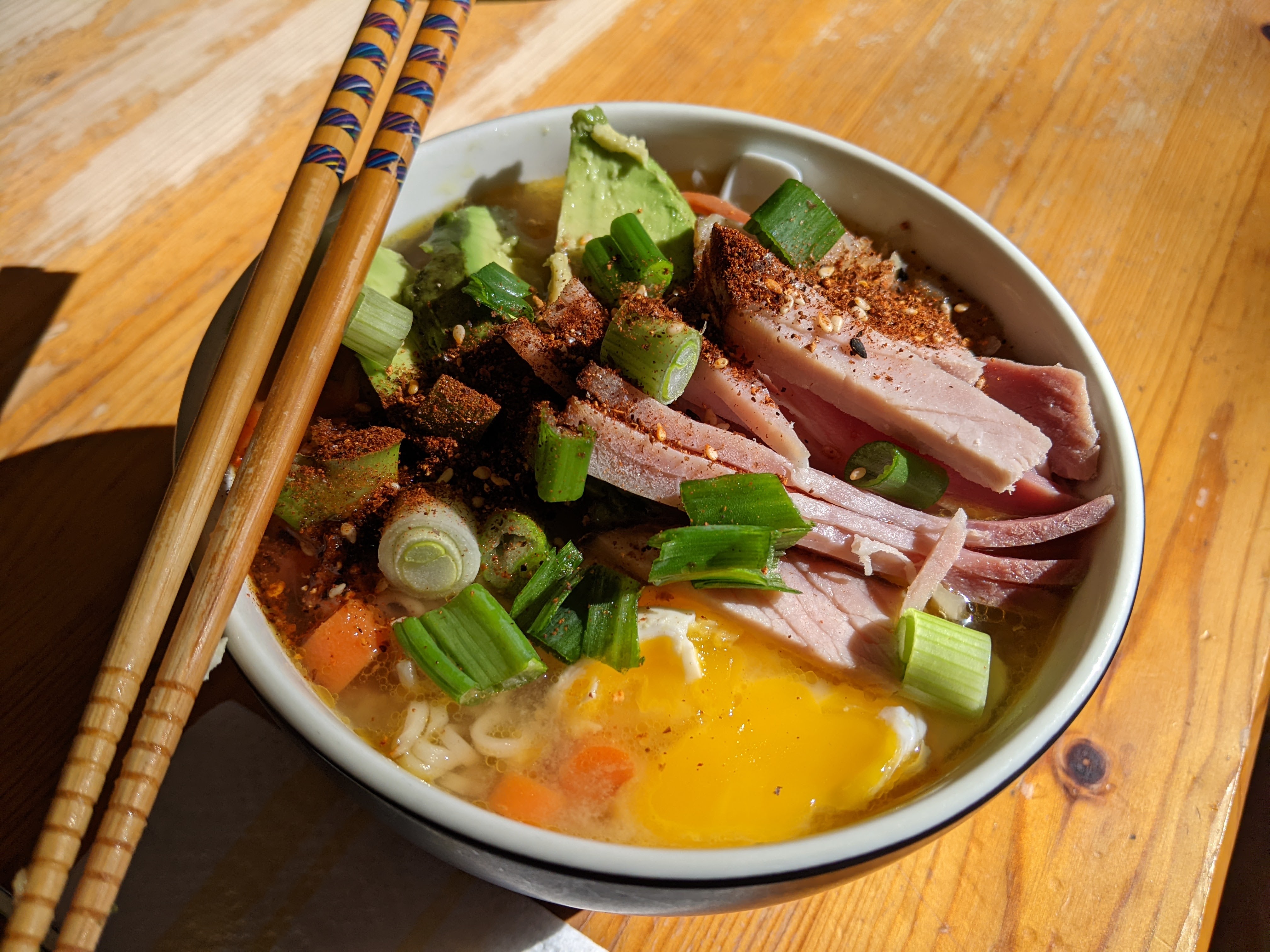
Ham and Egg Ramen with Avocado
Omicron variant.
Supercomputing Race
Just a popular press article on the current state of supercomputing. While the US and the Chinese were out-muscling each other, the Japanese took the lead with a better design. From Al Jazeera, which is becoming my go-to source for international news.
Visualising the race to build the world’s fastest supercomputers
American Gentry
At the beginning of the Trump political phenomenon, there was a myth that his supporters were working people in middle America, unemployed or under-employed rust-belt factory workers and coal miners. There may be some truth to this but Trump’s most vocal supporters turned out to be something else: people with resources. A good article in the Atlantic that looks at rural American wealth, something often overlooked by the media. The article is short on data but connects with other societies in other parts of the world and at other times.
American Gentry
Canada is Worried
Canada is worried about the political collapse of the US. This includes preparing for massive numbers of refugees from the US to Canada in the event of a collapse. Really. From the Globe and Mail.
The American polity is cracked, and might collapse. Canada must prepare
HOW BRITAIN FALLS APART
A good read from the Atlantic. Makes frequent connections to The Leopard, a book about the end of the Italian aristocracy. A good movie, too. The article misses the most famous quote though, which is perhaps good advice for the UK: “If we want things to stay as they are, things will have to change“.
HOW BRITAIN FALLS APART
More Texas Stupidity
From the people currently in charge:
If you can wait in line for a covid test, you can wait in line to vote.

Deep Learning Can’t Be Trusted
Stephen Grossberg was one of my math professors when I was an undergrad at Boston University in the early 1980s. I remember it being whispered that he was using up all sorts of expensive computer time, mostly at night, doing some sort of brain simulation. This supposedly accounted for the dark circles under his eyes and his slightly disheveled appearance. As a young engineer I was instantly intrigued. I tried to read about his Adaptive Resonance Theory, but not was mostly over my head. A few years later when I took a grad level course in Artificial Intelligence I read his ART papers as part of a class. I understood the ideas, but the math, never my strong point, was over my head. A few years ago I worked with some AI folks of the new generation and mentioned ART. They weren’t familiar with it. Glad to see it’s still around. Might have to have a go at Grossbergs new book Conscious Mind, Resonant Brain: How Each Brain Makes a Mind. I remember him being an engaging lecturer. Maybe this time around I’ll understand ART a bit better. From IEEE Spectrum.
Deep Learning Can’t Be Trusted, Brain Modelling Pioneer Says Stephen Grossberg explains why his ART model is better
Jimmy Carter: I Fear for Our Democracy
Good words from the best President in my lifetime (that sounds like faint praise, but I suppose the bar is pretty low).
 Steven A. Guccione