Author: Steven Guccione
Of money and morals
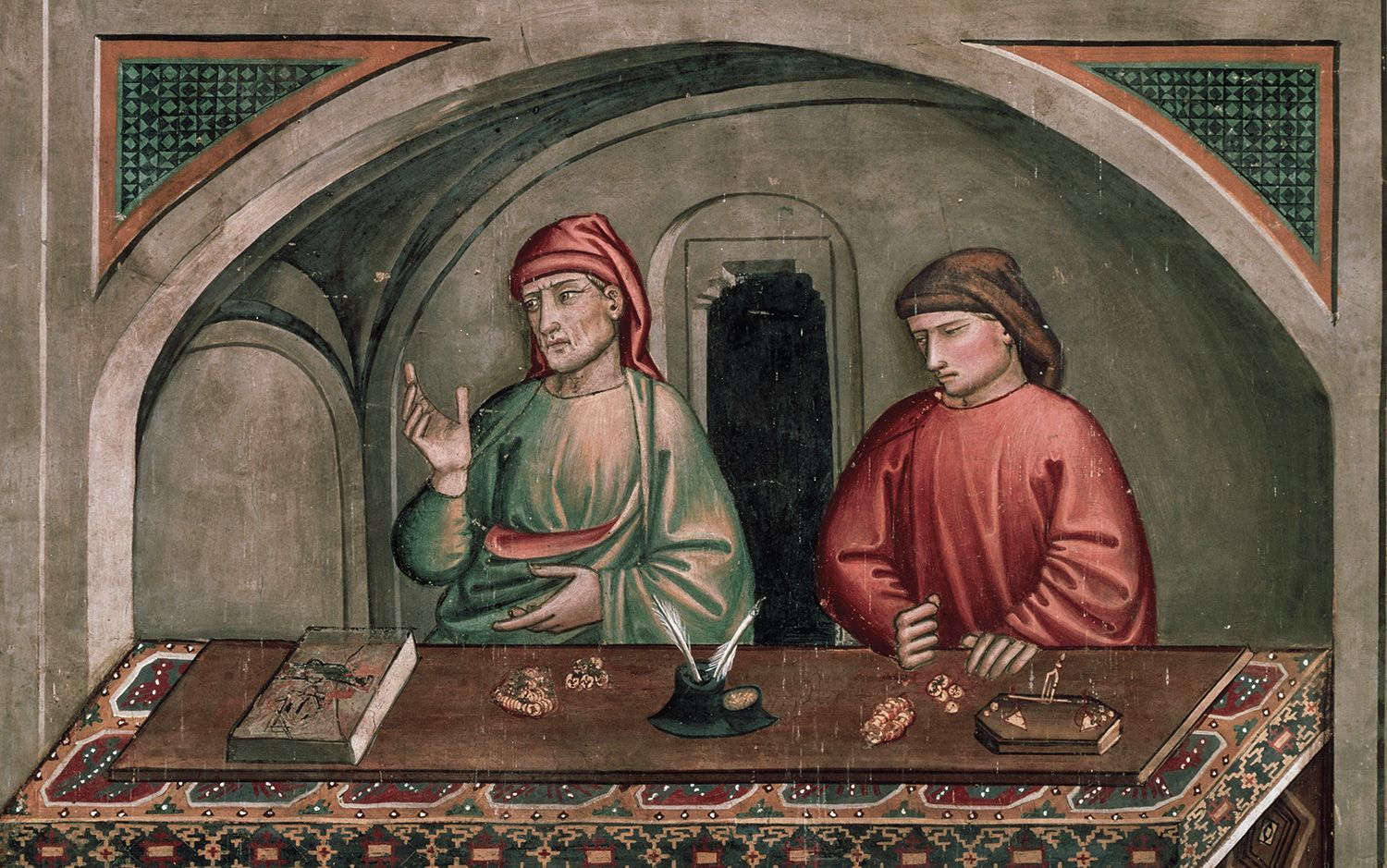 From Aeon: Of money and morals
An article about how interest and money lending went from being a sin to a major industry. Almost as interesting, how the idea of usury has all but disappeared.
Hamish Macbeth
 Finally got around to buying the old BBC series Hamish Macbeth. Might have to turn on the subtitles for Diane, though.
Coffee Beans

Had some Vietnamese food the other day at Pho Phi and finished it off with one of those drip coffees with sweetened condensed milk. It was so good I went and ordered a ‘phin‘ gadget from Amazon. I did some reading to see what is the right sort of coffee to use. I do know that they tend to use New Orleans style coffee and chicory (such as CDM or French Market), which might be why I like it so much.
It turns out that most coffee in the world (60% to 80% depending on who you ask) and nearly all of the coffee in the Western Hemisphere is Arabica. The story gets a bit complicated here. Robusta is the other major coffee bean, and it is considered inferior, because it is darker more bitter and has more caffeine. Sounds like all the things that make coffee, well, coffee. It is also widely grown in Vietnam, where it was brought in by the French. So there is the Vietnam / CDM / Robusta tie-in.
If you google “arabica vs robusta” you will find lots of links. Most of them consider robusta inferior to arabica, though I am not sure I agree. One article from The Atlantic tells the story: Arabica vs. Robusta: No Contest. A bit of history from the article:
. . . Robusta production greatly increased in the decades since World War II. Europe was devastated by the war. Food and money were scarce. The coffee markets responded in very different ways. In Germany, people who could afford it, wanted to buy beans so they could see whether fillers like chicory had been added. No “ersatz” coffee for them. In Italy and France, cheaper coffees and fillers found their way into the national taste. France encouraged Robusta production in its former colonies in west Africa and imposed a tax on Arabica coffees in support of that effort. Even now, blends that are 100 percent Arabica are always labeled to attract more discriminating buyers and to justify the increased price.
In the U.S., following the Brazilian frost of 1954, Maxwell House began blending Robusta to lower their costs. Others soon followed. All mainstream consumers in most every country have been very sensitive to coffee prices, which prompts roasters to maintain lower cost contents
A bit better is from Lavazza: Arabica and Robusta Coffee: Two species, infinite blends
They describe robusta as:
Coffea Canephora (Robusta) is widespread in Africa, Asia, and Indonesia, and accounts today for approximately one third of the world’s production. It grows at altitudes between sea level and 600 meters, where it can bear very hot and humid climates, with peak temperatures of over 30°C.
After roasting, the yield is a full-bodied coffee with a chocolatey flavor and a persistent aftertaste.
Sounds good to me.


Waiting for a Train
Germany, August 11, 2017

Inernet News and Motives
A Google search of “Las Vegas shooter motive” shows up the following headlines from major news sources (you can do your own Google for the links):
- Las Vegas gunman carefully planned attack; motive is mystery
- Las Vegas shooting: Police release preliminary report, no motive …
- Las Vegas shooting suspect’s motive remains a mystery – USA Today
- Las Vegas mass shooting: No motive uncovered | abc7.com
- Still no motive in Las Vegas mass shooting – NY Daily News
- No motive uncovered for Las Vegas mass shooting, sheriff says | WGN …
- etc.
Now if you change the search slightly and Google “Las Vegas shooter losing money” you get:
- Las Vegas shooter had been losing money for two years and ‘was …
- Las Vegas shooter Stephen Paddock had lost money, been – CBS News
- Las Vegas shooting: Gunman Stephen Paddock lost significant money …
- Las Vegas gunman Stephen Paddock lost money in 2 years preceding …
- Las Vegas Sheriff Says Gunman of Mass Shooting Had Been Losing …
- etc.
So is losing ‘significant money’ at a casino for two years not a motive for shooting the place up? Especially in the absence of any other reasons? I guess that would be bad for business to publish that.
Afternoon Food
One bag is dried bananas (as indicated), the other is a dog snack. Best to know the difference! Also a dragon fruit and some soursop fruit juice from Central Market.


A Sense of Purpose
Larry Fink, the CEO of BlackRock ($5.7T AUM), sends out an annual letter to CEOs. This year it talks about ‘stakeholders’ and long term value and “a new model for corporate governance”. Worth a read.
A Sense of Purpose
. . . a company’s ability to manage environmental, social, and governance matters demonstrates the leadership and good governance that is so essential to sustainable growth, which is why we are increasingly integrating these issues into our investment process.
Companies must ask themselves: What role do we play in the community? How are we managing our impact on the environment? Are we working to create a diverse workforce? Are we adapting to technological change? Are we providing the retraining and opportunities that our employees and our business will need to adjust to an increasingly automated world? Are we using behavioral finance and other tools to prepare workers for retirement, so that they invest in a way that that will help them achieve their goals?
As we enter 2018, BlackRock is eager to participate in discussions about long-term value creation and work to build a better framework for serving all your stakeholders.
 Steven A. Guccione