From IEEE Spectrum.
Inside the Third Reich’s Radio

I’m have long been critical of “self driving cars”, at least the way people like Elon Musk describe it. This article explains quickly and simply the problem.
It keeps getting dumber. In an attempt to shift blame and chisel and advantage, the oil and gas dinosaurs here in Texas are trying to penalize renewables such as solar and wind power. How about letting Texas buy (and sell!) electricity to other states, like the rest of America?
Austin has always been a liberal oasis in the vast conservative state of Texas. I have always liked it here, but the state government’s ongoing vendetta (if that is the word) against the city has always bothered me. It seems to be getting worse. Too many things to cover here (like why was half of Austin blacked out for days during the Big Freeze, even as Austin Energy had enough capacity to power the city). Seems other people have noticed. From the local media.
After (perhaps) dodging scandals in the Trump Administration, and managing to distance himself from the ongoing Texas electric power disaster, Rick Perry returns. I wish him well on this one.
Really? From Twitter. Sounds like a bunch of generators shut down and now rates are going to go up, at least temporarily. In April. ENRON, anyone?
Alert: Due to a combination of high gen outages typical in April & higher-than-forecasted demand caused by a stalled cold front over TX, ERCOT may enter emergency conditions. We do not expect customer outages. Declaring an emergency would allow us to access additional resources.
I keep coming to the inescapable conclusion that the leaders of my state are trying to kill it’s citizens. Texas resembles a failed state more every day. Some hidden agenda seems to be more important than the truth, or even the lives of it’s citizens.
My first thought was: wow, lots of words for stupidity in italian. Then I realized there are probably more in English.
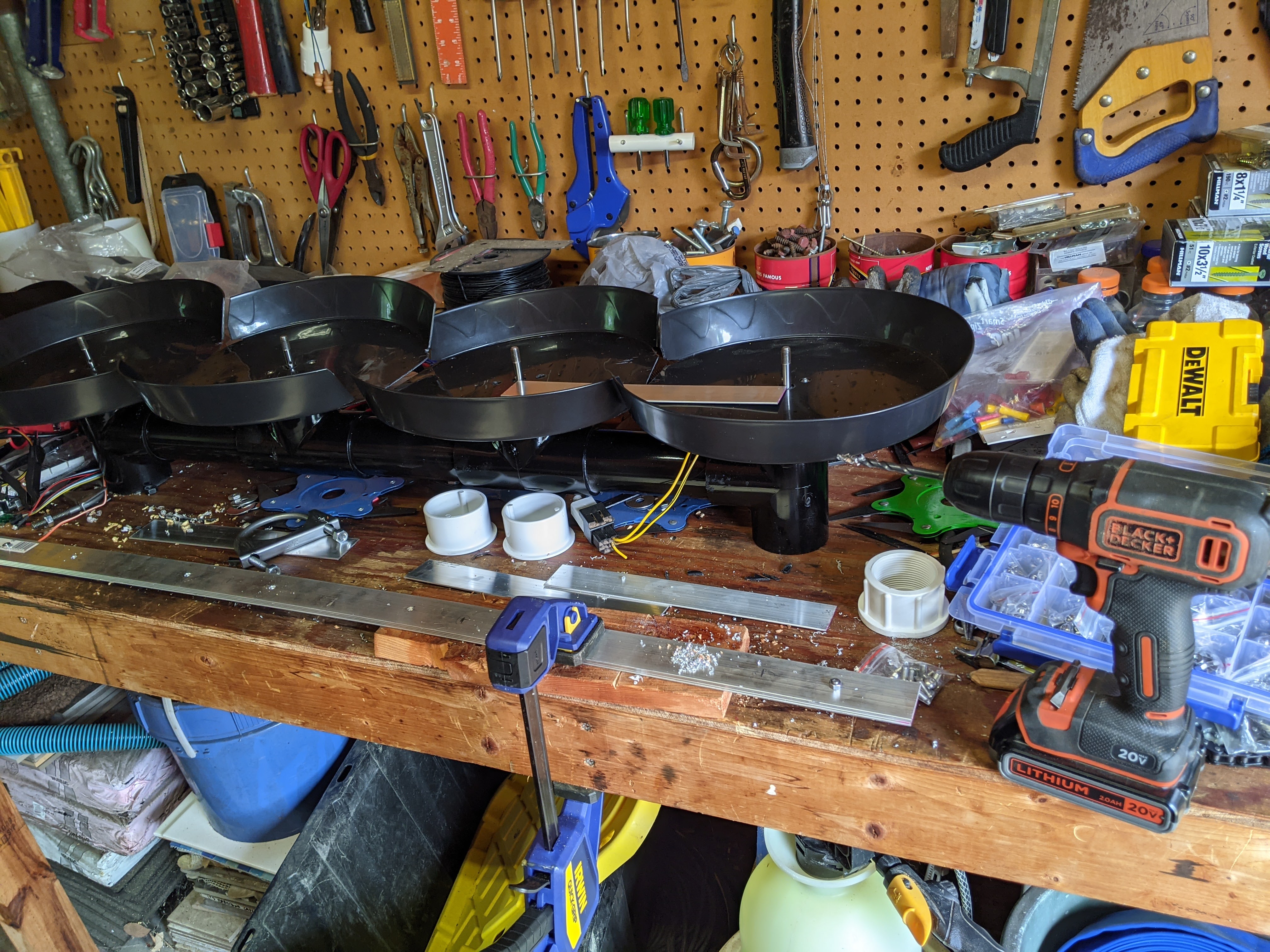
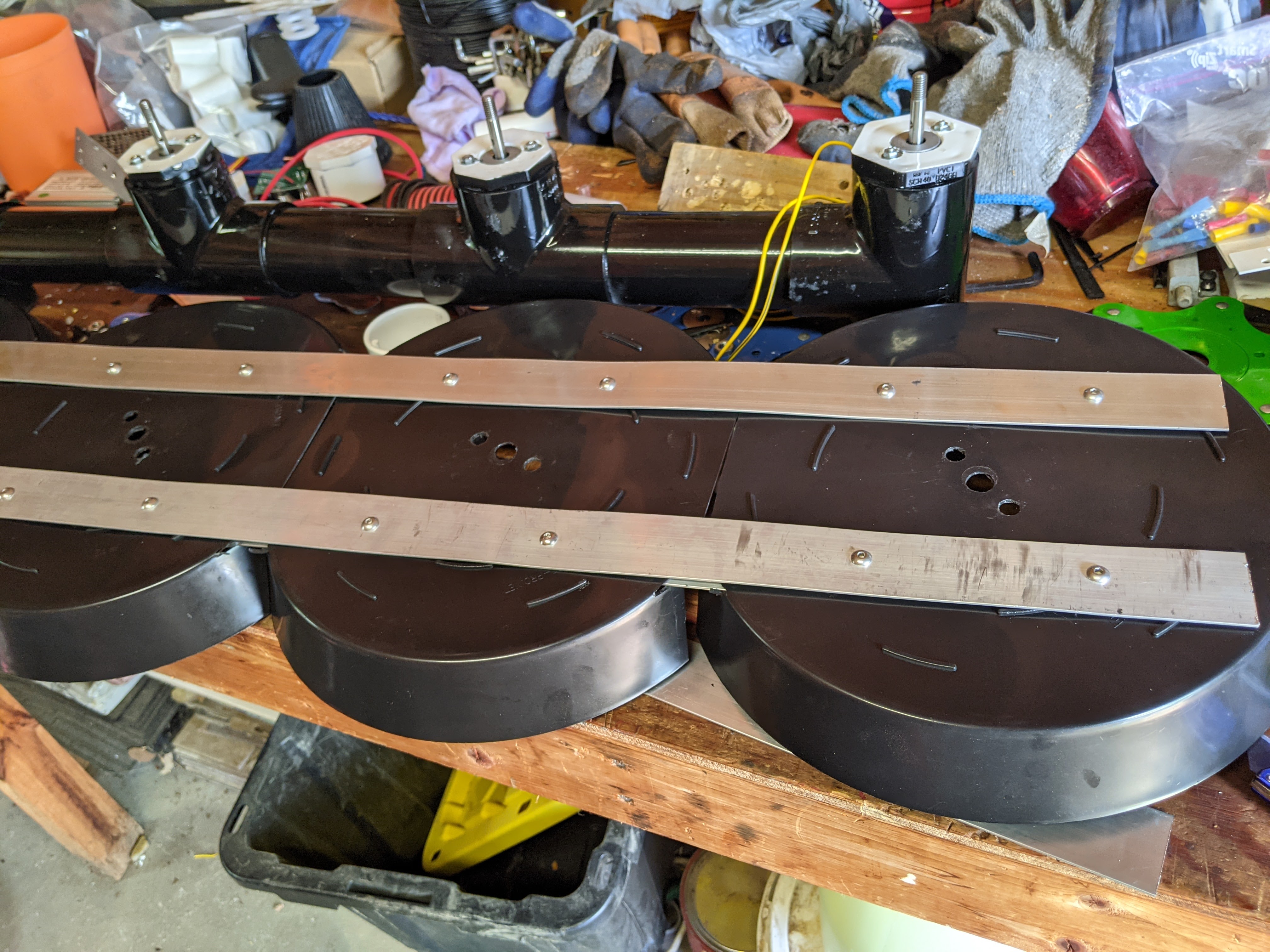
I glued the PVC pipes for the blade unit and even painted it all black. I needed some way to cover the blades, mostly to prevent accidents. Not likely these little blades will be throwing rocks around. I found some plant saucers on Amazon that looked like they could do the job. The problem is how best to attach them. I bought some aluminum strips and decided to bolt them together. Some cutting, drilling and bolting and I made a nice little cover for the blades. Bought some u-bolts to attach the cover to the PVC pipe, which is going to require just a little more drilling.
I went back and re-installed the big handle to raise and lower the blades and re-purposed some of the mechanism used to lift the original deck. Instead of four offset lift points, I now have just two parallel to each other. The last job is to figure out how to connect the whole blade unit to these lift points. It needs to be offset to give some overlap in the blade paths so that there aren’t uncut stripes in the grass. Also hope the whole arrangement is flexible to handle a bit of collision but not so flexible that the blades move around in normal use. Almost there.
I’m have had a Worx Landroid mowing a part of my back yard for about five years. I like it but it is expensive. I think I paid $700 but today they cost even more. You can spend as much as $2,500 on one. Why, I don’t know. This article has a quote that should be repeated. This is about all small engines.
… according to California’s Air Resources Board, operating a commercial lawn mower for just one hour emits as much pollution as driving a Toyota Camry about 300 miles. For a commercial leaf blower, one hour of operation emits pollution comparable to driving a Camry about 1,100 miles.

