Thanksgiving

I started reading There There by Tommy Orange and in the introduction I was introduced to an alternate version of Thanksgiving.  In this one, the native Americans / Indians are slaughtered by European colonists just a few years after their arrival.

To be sure my memory, and perhaps education, on this subject is a bit confused.  I seem to have mixed the Pilgrims, the Puritans and the Virginia Commonwealth settlers.  They all arrived around the same time, and seem to have gone through the same quick cycle with the locals.  Of course, the English had arrived in the middle of ongoing tribal conflicts.  Being both naive and heavily armed all but guaranteed conflict with the natives.
Indian massacre of 1622

Moving a Woodpile

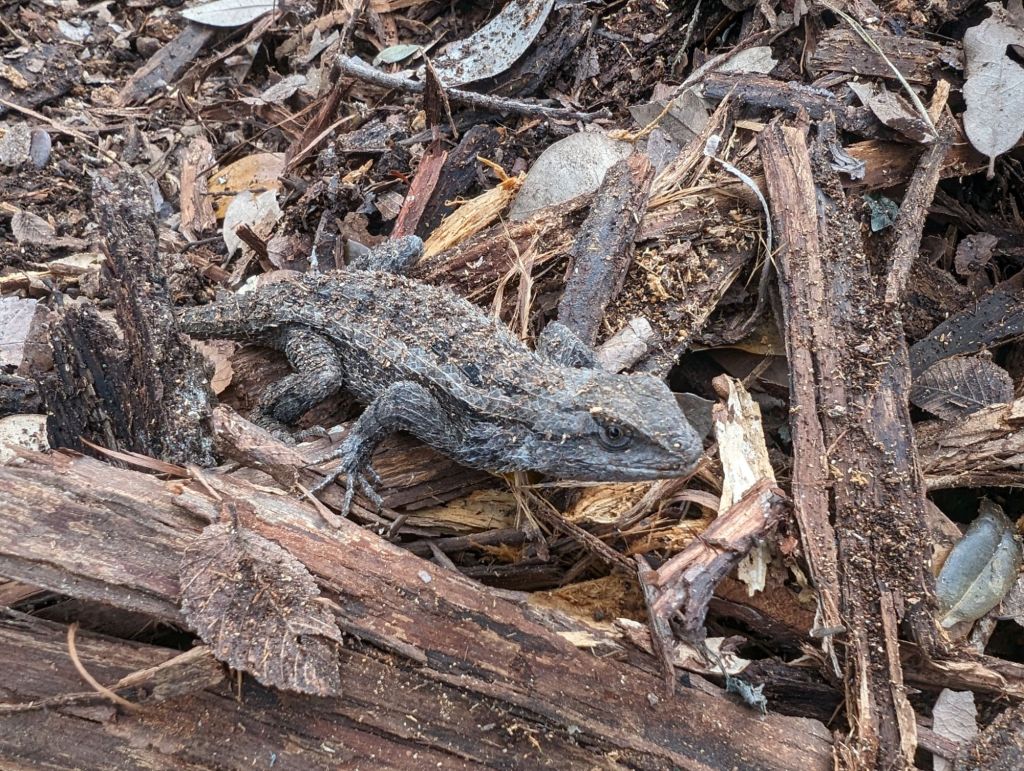
An old woodpile in the back was falling over. Decided to move it over a few feet and clean it up in the process. When I got to the bottom I found this fellow. He wouldn’t budge. I suppose he was upset that his house was gone. I eventually picked him up and carried him over to his new digs. Hope it all goes well for him.

Ethanol Land Use

The US has subsidized the use of ethanol from corn to mix with gasoline as a fuel source, mostly for automobiles. It never seemed to be a great idea, since all of the production and transportation of this corn takes energy, but it is a locally produced product. I was wondering what the future of ethanol (and corn) would be in the US as vehicles transition to electric.

The USDA says about a third of all corn grown in the US is used for ethanol production. I was surprised by this number. There are almost 20 million acres of corn grown in the US. Roughly 6 million are for ethanol. There are 640 acres in a square mile, so this is a bit over 10,000 square miles. This is an area the size of Maryland, significantly larger than New Jersey.

Corn is America’s Largest Crop in 2019

Oil Shipping

I was wondering how much of worldwide shipping is oil. Just moving crude and products around the world. I was expecting a significant number, but was surprised to learn it is almost one third of all shipping by weight. Not only does it take energy to move all of this oil around, but this also produces pollution. I wonder how this all compounds when you consider nearly all renewable energy is locally produced and requires no transport, at least not in the traditional sense. From Statistia.

In terms of tonnage, oil tankers accounted for around 29 percent of global seaborne trade that year.

Capacity of oil tankers in seaborne trade from 1980 to 2022 (in million dwt)