Electric Riding Mower Direct Drive Test

I was been simultaneously itching to try out the new direct drive on the riding mower project, but also a bit afraid. It something burned up or broke, I was probably finished. So I promised myself I would do it right and reassemble the whole back end and put in a proper kill switch. And I was distracted with the blades.

I decided at the last minute to keep the big blade height handle. I figured out a way to connect it with the new motor set up. Hopefully I will be able to use it to control the blade height. At this point I am happy with the motor and the electronics. I will post a video in the next posting.

Electric Mower Design Decisions

I feel like I’m getting to the end of this one, at least the 1.0 release. There are a few pieces left.

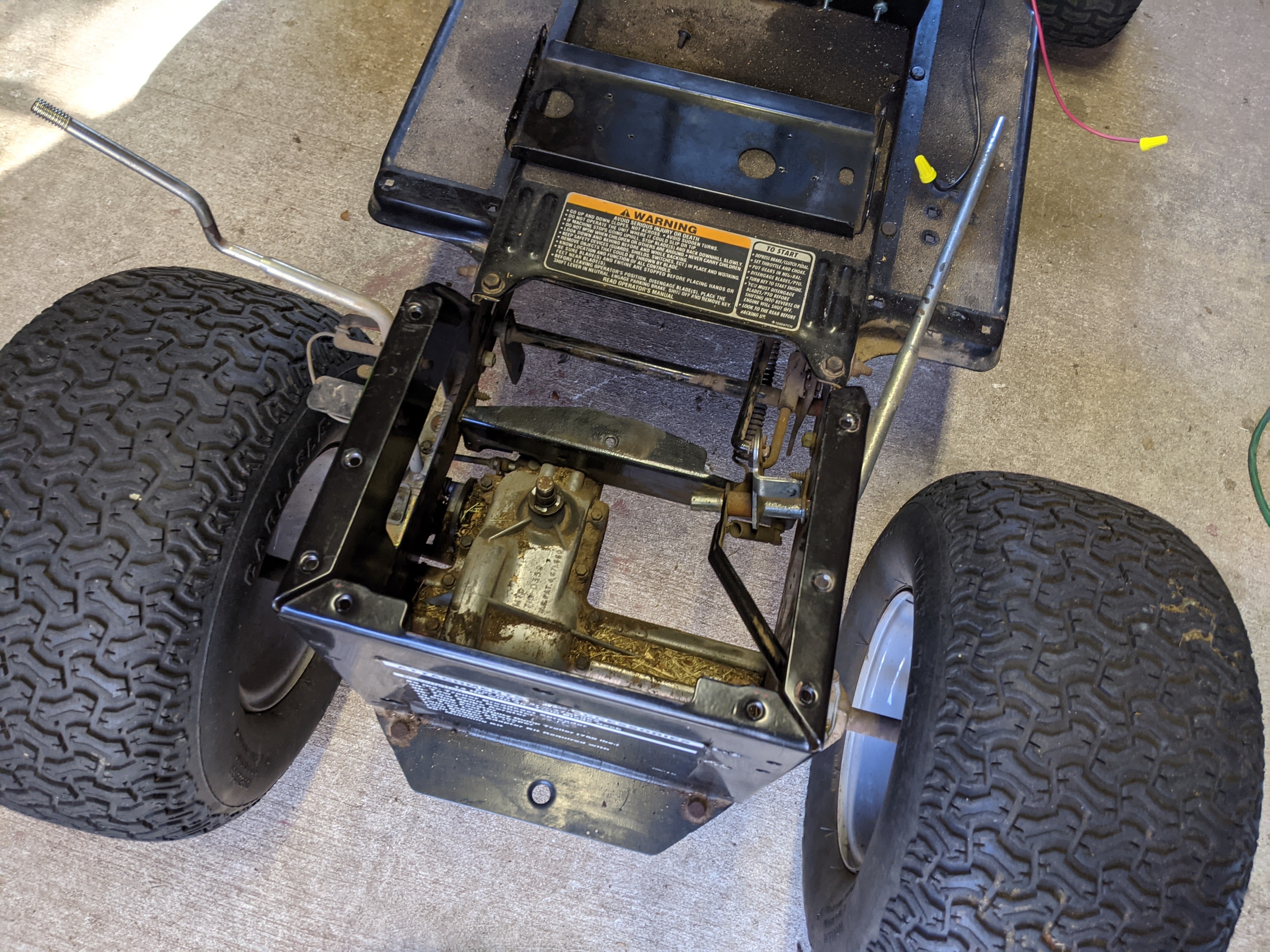
Shifter: the shifter is large and probably over designed. All it does is push a small rod into the transaxle to change from forward to neutral to reverse. With an electric motor, this isn’t really required. The motor is easily turned off and even reversed. All that said, it isn’t in the way and it could be useful, for instance, to put the transaxle into neutral. Tempting to take the mechanism down to simplify things but it will stay, for now.

Brakes: there is a brake lever on the transaxle very near the shifter. In the photo it is connected to the spring. This is connected to a rod and to the large pedal. This pedal was a combination brake and clutch and had some complex mechanical and electrical interlocks to the old blades and engine. The pedal works well enough but needs some springs to keep it in place. Looking at repurposing some of the old springs. Will also have to put in a stop using a bolt. My other concern is braking with the motor engaged. It is possible to mount an electrical switch to turn off the motor when the brake is engaged. We will see if that is necessary in practice.

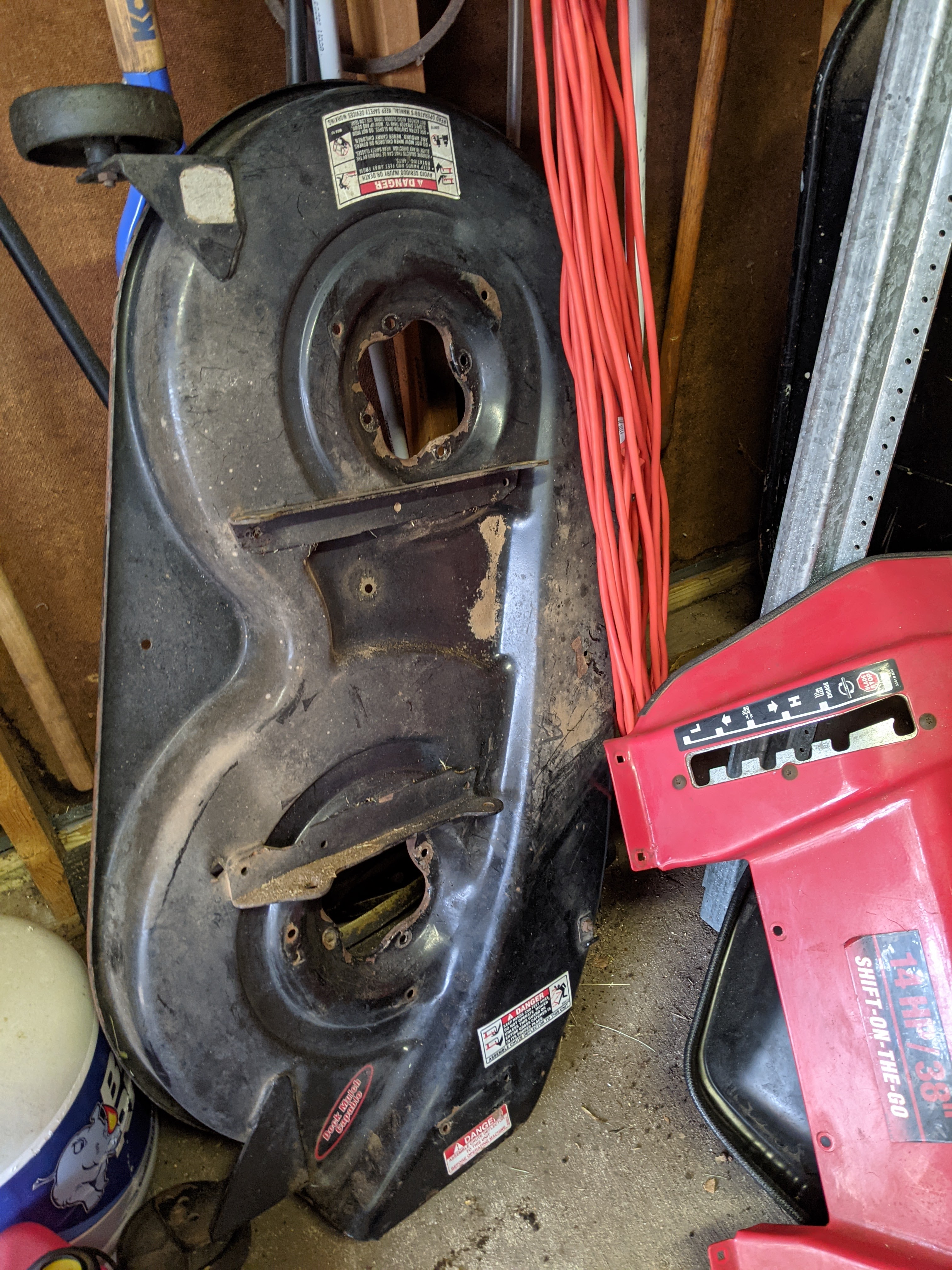
Blade Height: the metal bits are the original blade deck lift mechanism. I intended to use it, even though it was overkill, but the mounting of the motor made me take it down, piece by piece. I may yet use some or all of these pieces and mount points to control the mower blade height, but this is still open. Perhaps the last open design issue.

Electric Mower Blade Test

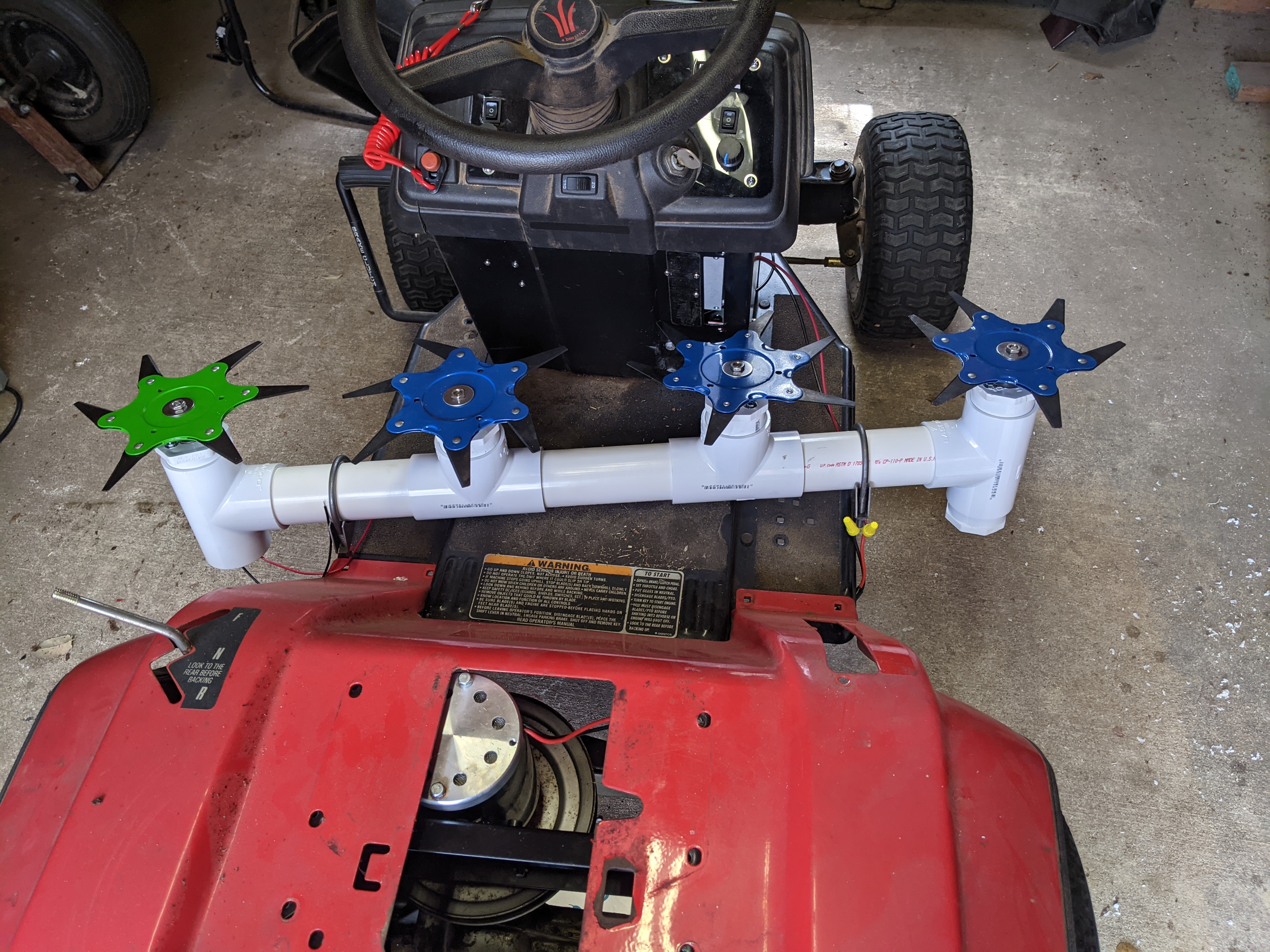
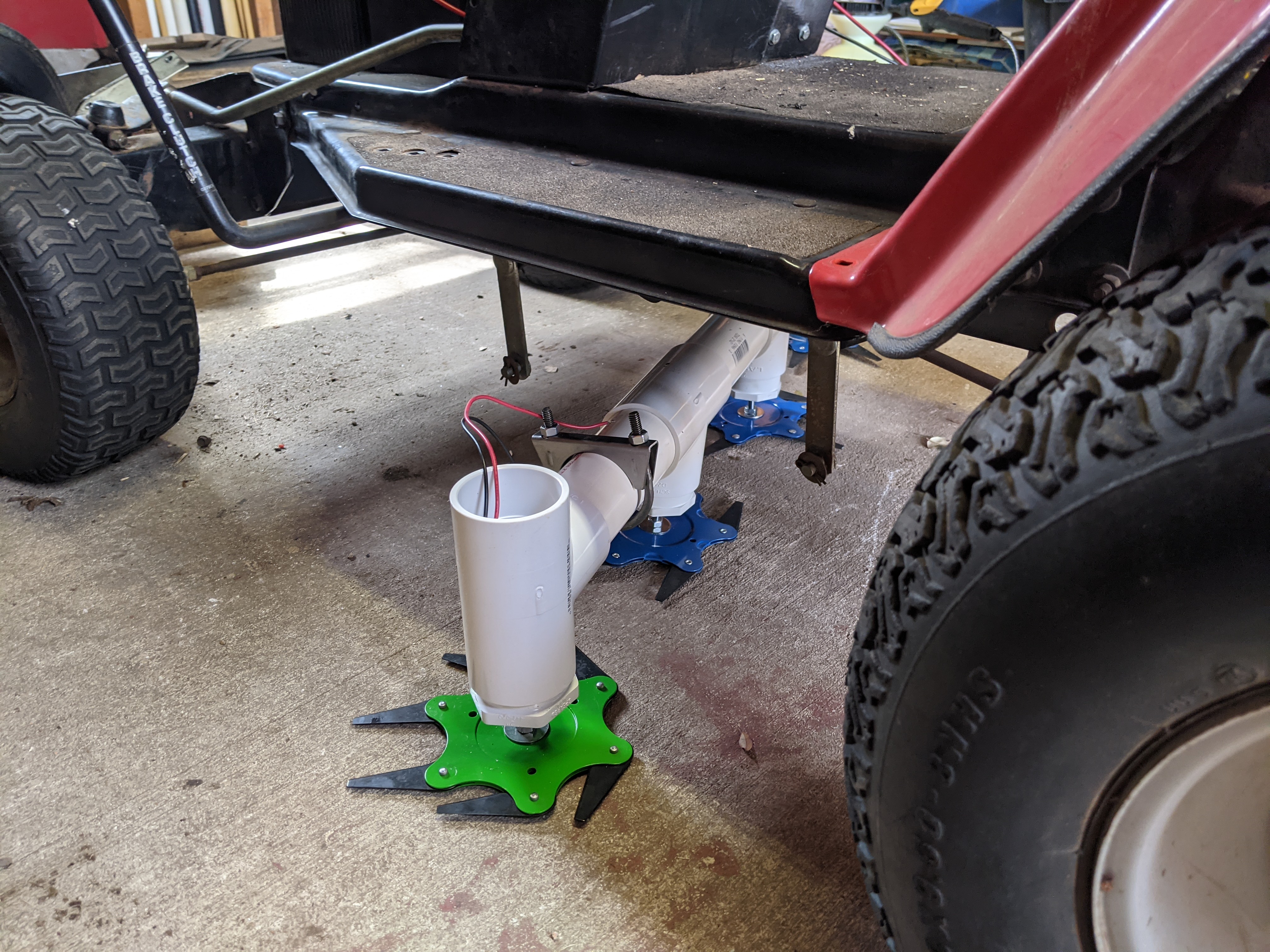
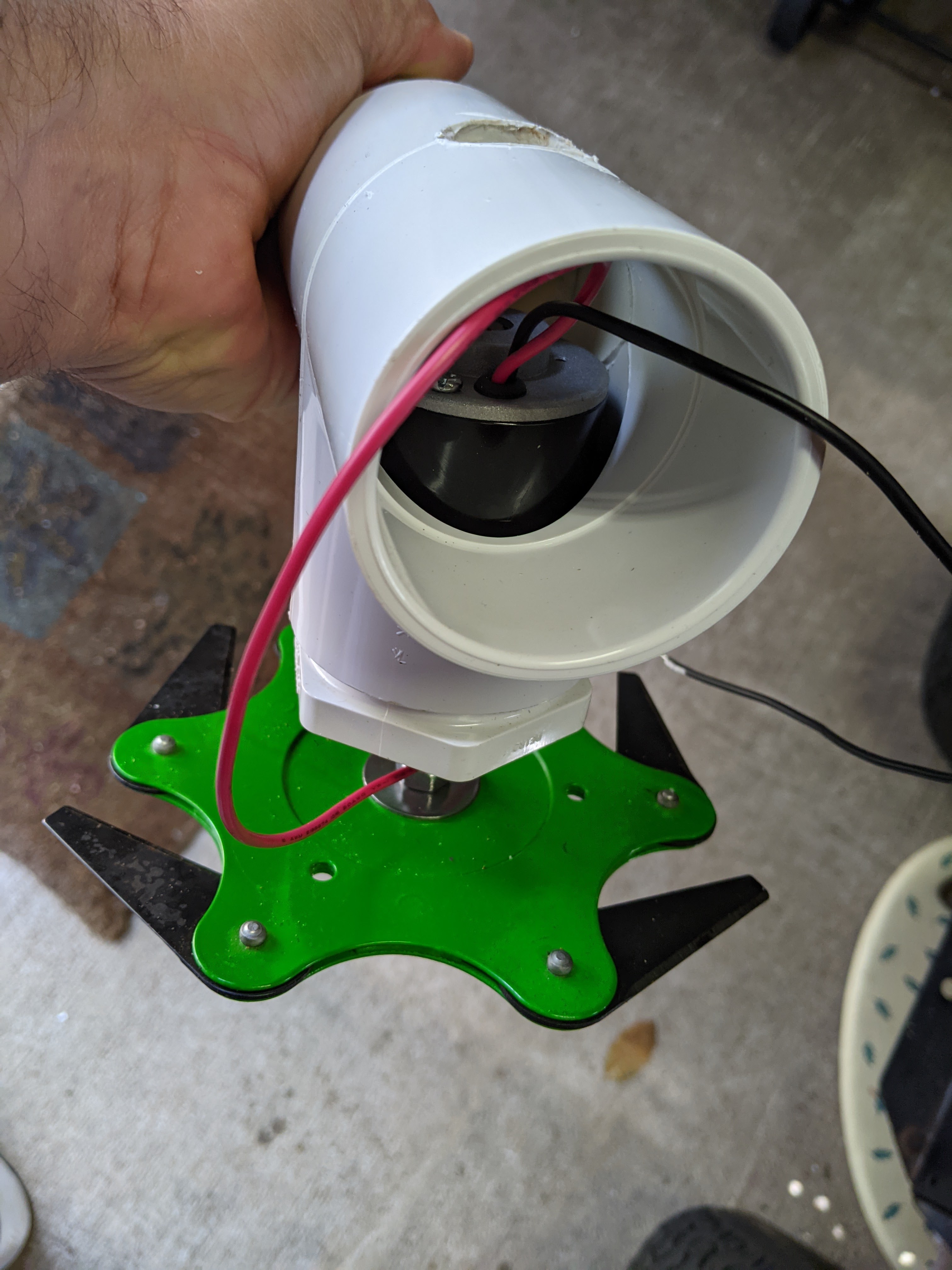
The blades are just some 24V scooter motors with heavy duty weed whacker blades mounted on them, all mounted into some 2″ PVC pipe. Wired it up using my fancy new WAGO lever nuts and hooked it up to the new controller. Need to put in a safety cover and figure out the mounting and lift mechanism but it looks up to the job. Still haven’t ridden the direct drive yet. Going in a few different directions at once.

Mower Rework

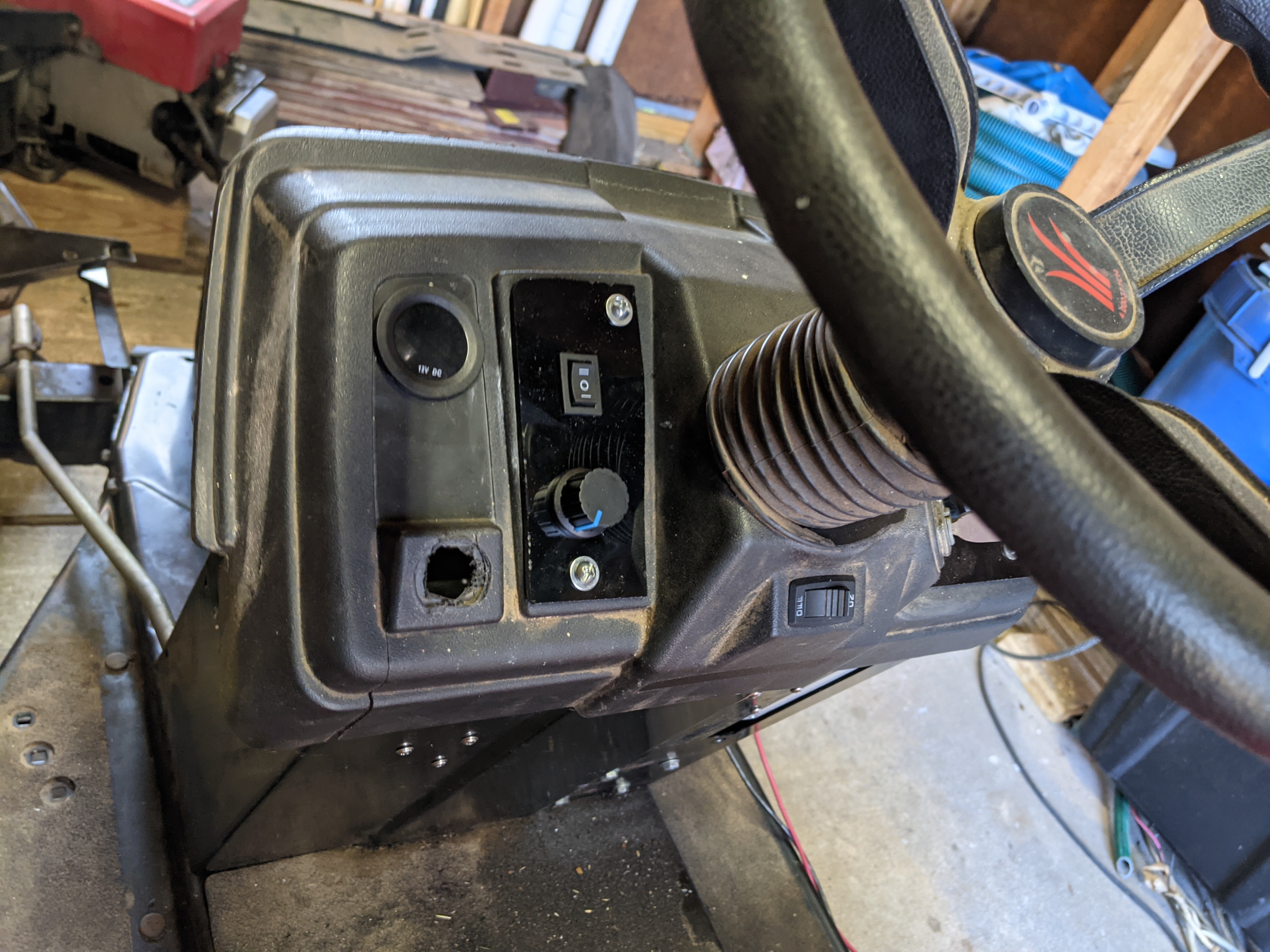
Installed the replacement controller for the blades. Still no idea what happened to the old one. The new one doesn’t have an LED display, which I really don’t need. I was tempted to leave the switch out, too, since the speed knob also is an on / off switch, but decided to leave it in. Easier to reverse the blades, which are sharpened on both sides. Had to cut some new plastic for the dash, but I am getting good at that. I also realized that my kill switch is “normally open”, the opposite of what I need, so I ordered a new one.

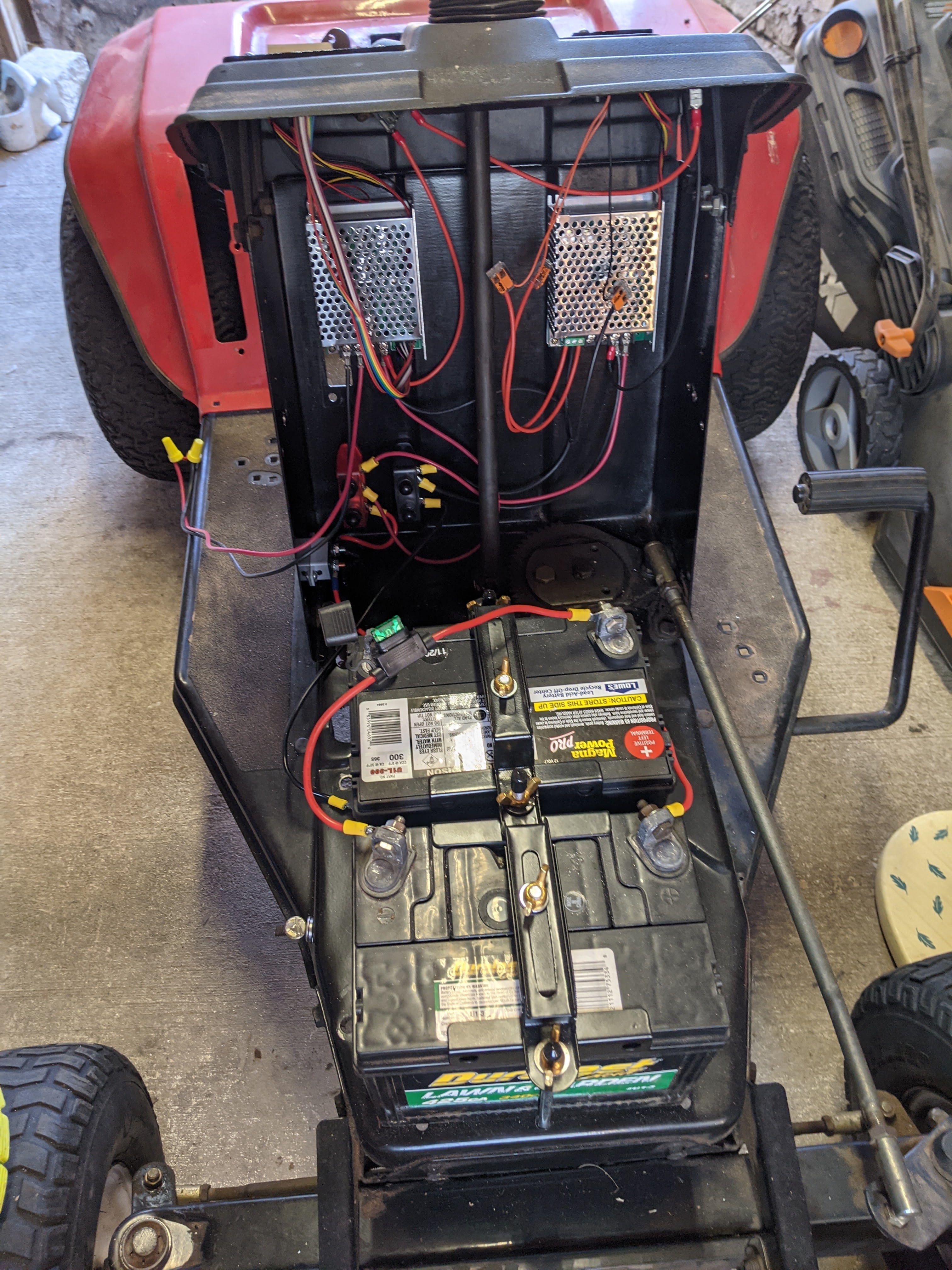
On test I heard a pop and smelled something burning. Damn. I had wired the new controller battery outputs to the motor terminals. It was labelled in only Chinese, but it matched the old one and I could read the English on the circuit board underneath. Totally my fault. Seems I blew a 30A fuse on the battery cable that I put in just for extra safety. I am becoming a big believer in safety.

Swapping the fuse, the motor controller still works, but haven’t hooked up the blades to see if I damaged anything. Also been studying the brake and the blade deck lift mechanism. Both are big and heavy and complicated. Going electric simplifies just about everything but now I need to re-invent the lift and the brakes. Oh, used some of these German wire connectors. No reason to go back to wire nuts. I’m told to be careful and buy the real German product and not cheap knock-offs.

Electric Riding Mower Blades Dry Fit

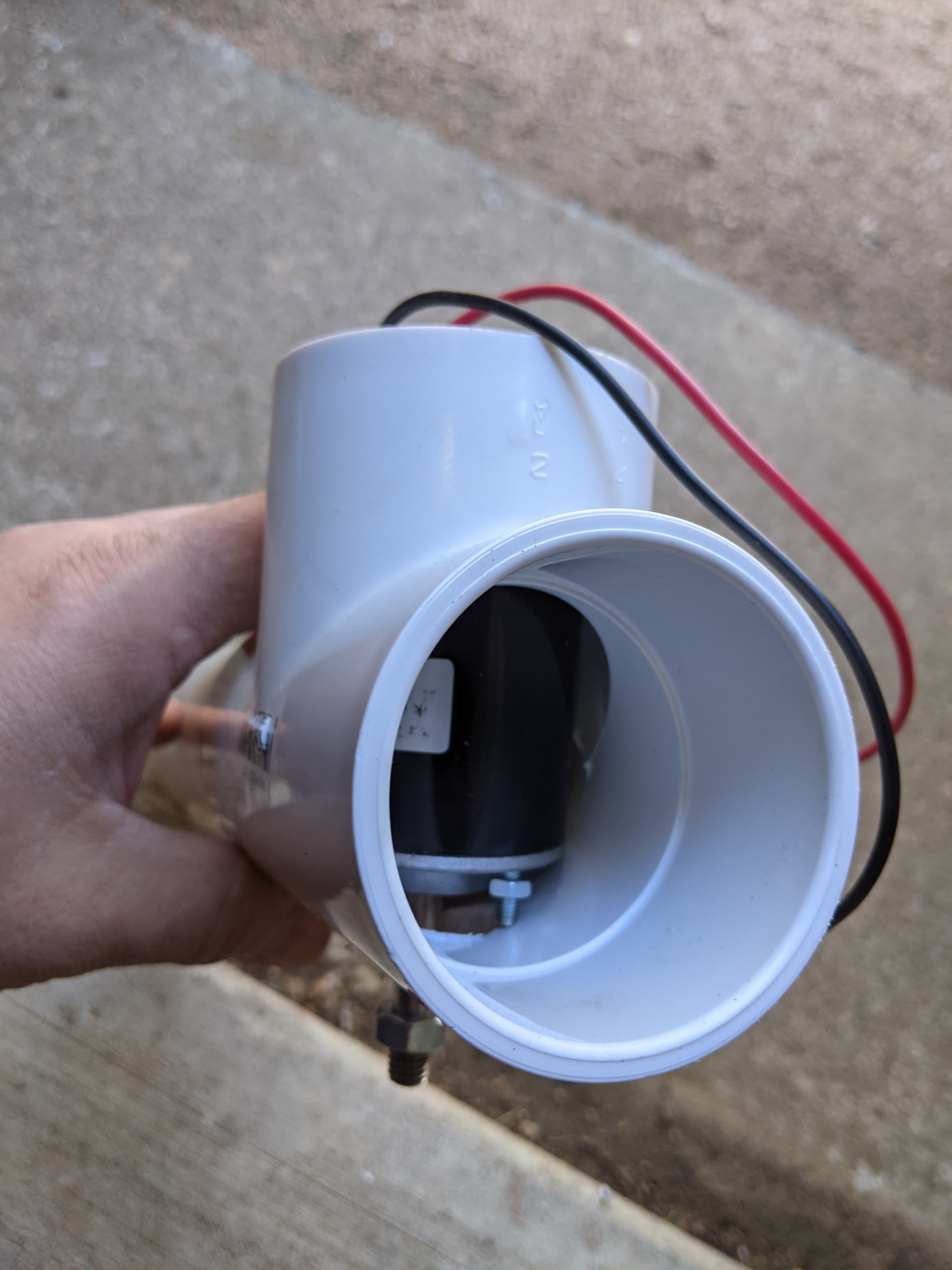
Found the nice little 24V 30W motors that fit exactly inside of a 2″ PVC pipe. Took me a while to get around to it but cut and dry fitted the pieces to see how it looks. Bolted on these string trimmer replacement blades that are available from all sorts of vendors for a wide range of prices. Went for the least expensive ones, at $7. I was going to use the same controller as the one for the main motor, but somehow, after I had fully installed it, it turned up broken. So I ordered a simpler replacement controller. I really don’t need the LED readout.

Will glue it all together and wire it up another day. I still need to figure out how to hook in up to the original blade height mechanism. I removed much of it because it was made for a different platform that was maybe 70 or 100 lbs of metal. Looking for a simp!e soultion (as always). Also need a safety cover. Looking at some pie pans, which are metal, but instead might go with some of those shallow plates that go under flower pots. Plastic and easier to work with. Everything is smaller and lighter so no real need for a massive deck. Just something to prevent dumb accidents.

Electric Riding Mower Drivetrain 2.0: Direct Drive

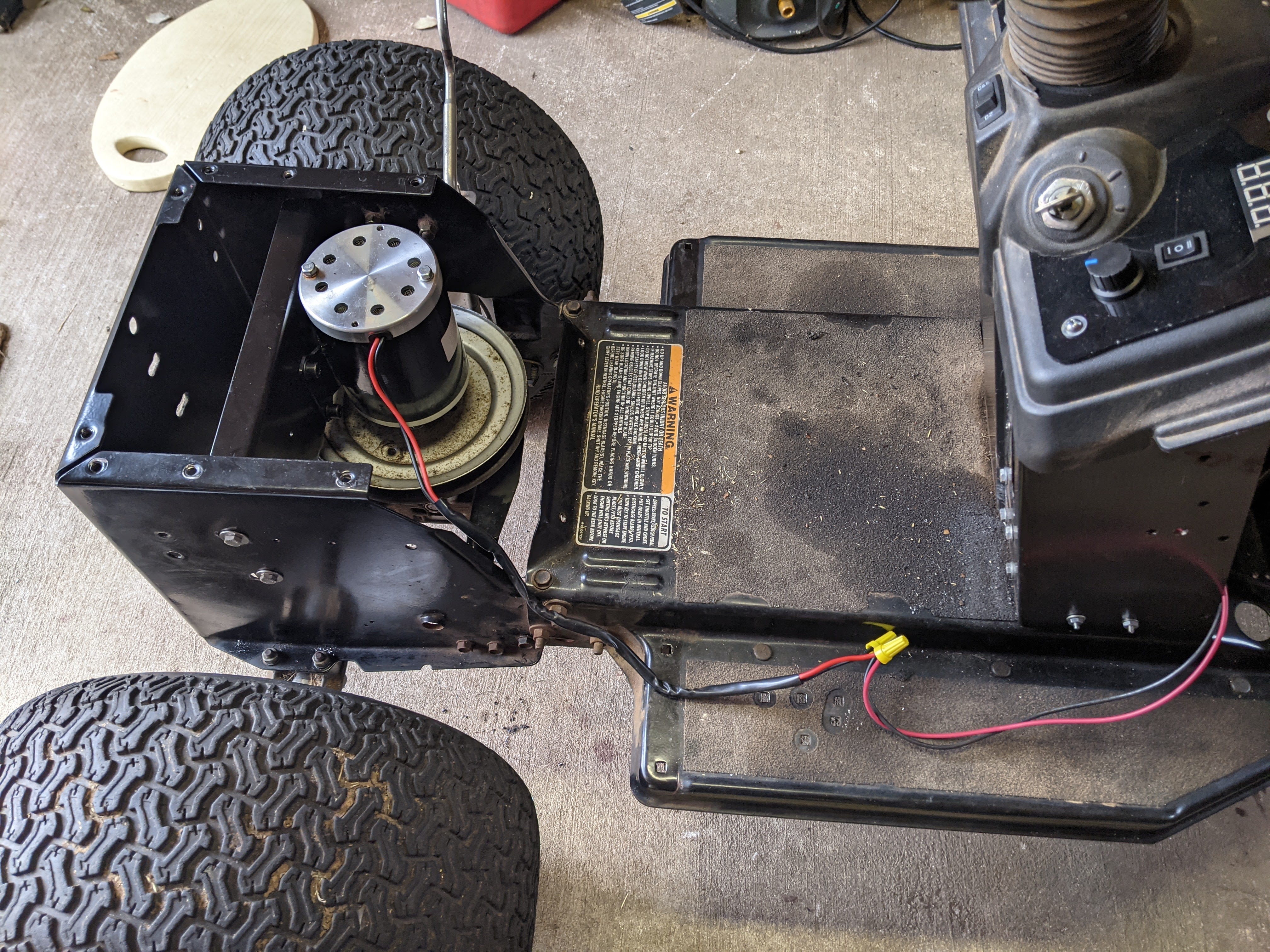
I finally got around to experimenting with replacing the slow and unreliable chain drive with direct drive. The metal plate supporting the motor came from the front someplace and fits perfectly. I was worried about aligning everything. With six or so degrees of freedom and me with a hand drill, it seemed beyond my abilities. I learmed a trick: drill big holes and use bolts and adjust and tighten up as you go along. The old fenders even fit. Heck, if I went with an expensive lithium battery there would probably be room for it in the back, too. It seems a bit noisy but I’m guessing the 20 year old transmission could use some grease. Unfortunately there isn’t a simple way to do this. I will have to take the whole transmission housing apart. Maybe at some point.

Funny, all the effort with chains and sprockets seems like a waste, but I guess that is prototyping. You try stuff out and try to hop from A to B. Sometimes it works, sometimes it doesnt. Will give it a ride tomorrow of the next day. It’s going to be fast and lots of torque. Will probably hook up the deadmans switch first. Maybe wear a helmet.

Direct Drive

Haven’t spent much time with the mower project lately. Being below freezing for the last week put a crimp in lots of plans. Fortunately we had power for the duration, but many in Texas did not.

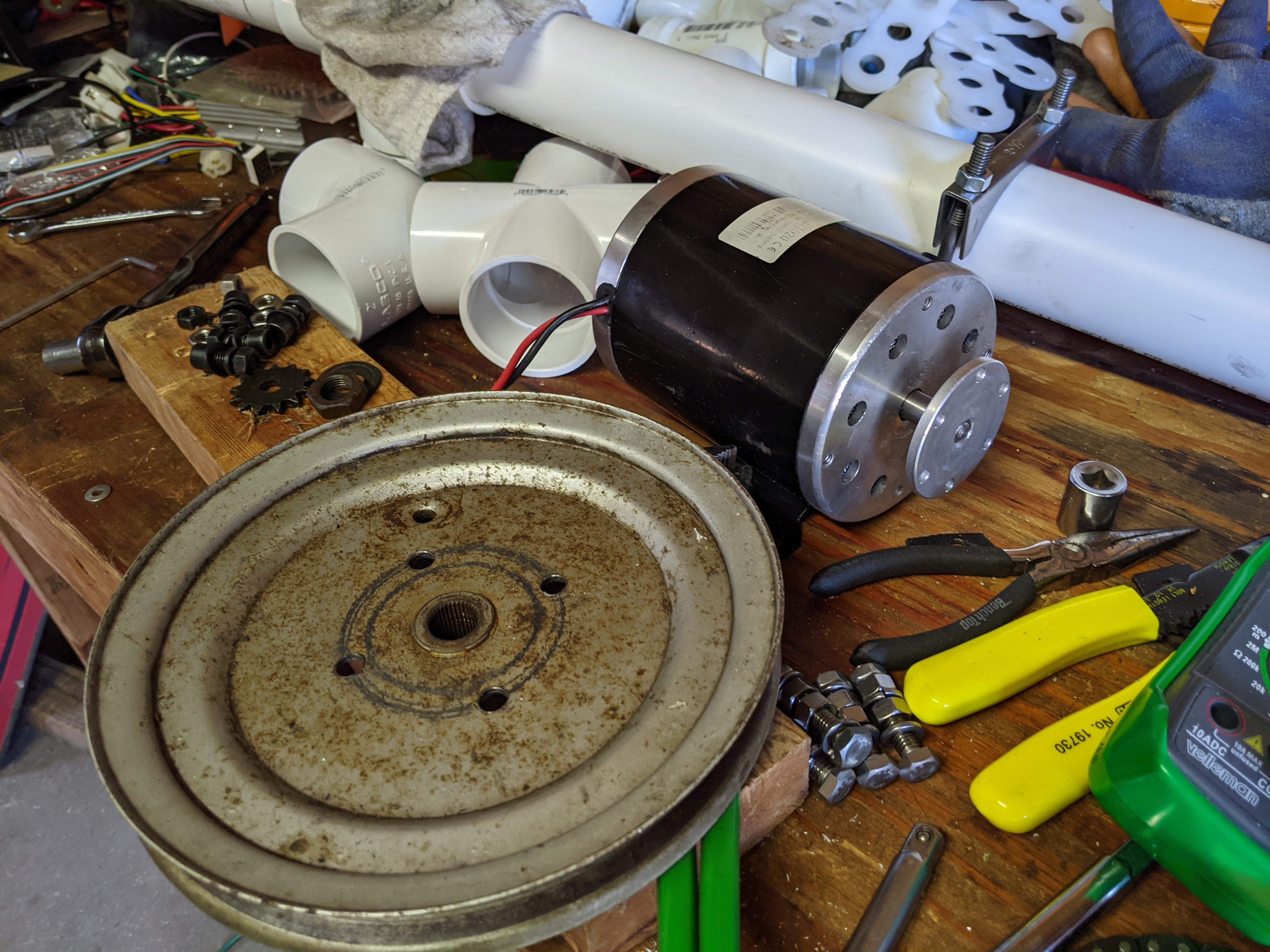
Today I decided to start work on direct drive, even though I’m in the middle of the blade implementation. The reason is the chain drive is slower and less reliable than I expected. I also found this adapter, a 10mm DD bore hub to be exact, that fits on my motor that ought to allow me to couple the motor directly to the old drive belt pulley. I don’t really know what I’m doing here and don’t even know what the issues are with connecting a motor shaft directly to drive shaft. I’m worried about alignment and vibration, and all I have is my usual power drill and various hand tools to do the job. Had to do a little filing to make the adapter fit. Getting everything bolted together in that tight space and finding a way to mount the motor is going to be a challenge. But hey, this is all a learning experience.

More Mower Parts

I was starting to get a bit bored with the mower project. After all, the exciting part was actually getting it to go. But as I said, this isn’t about just basic functionality. So I’m adding a few bits.

First, a word about safety. The original mower had a few safety features. I don’t think I will replicate some of them. For instance you could not mow in reverse. I don’t know why, but the engine would stall if you tried. I assume it was safety related. I’m not concerned about this sort of thing. One safety feature was a switch on the seat that meant you had to be sitting on the seat for the mower to go forward. Probably a good idea. Don’t want unmanned riding mowers plowing through the neighborhood. Especially with an experimental vehicle like this, I am concerned about this issue. I was thinking of ways to use the existing seat switch, but it would mean running some wires places that I didn’t really want to run wires.

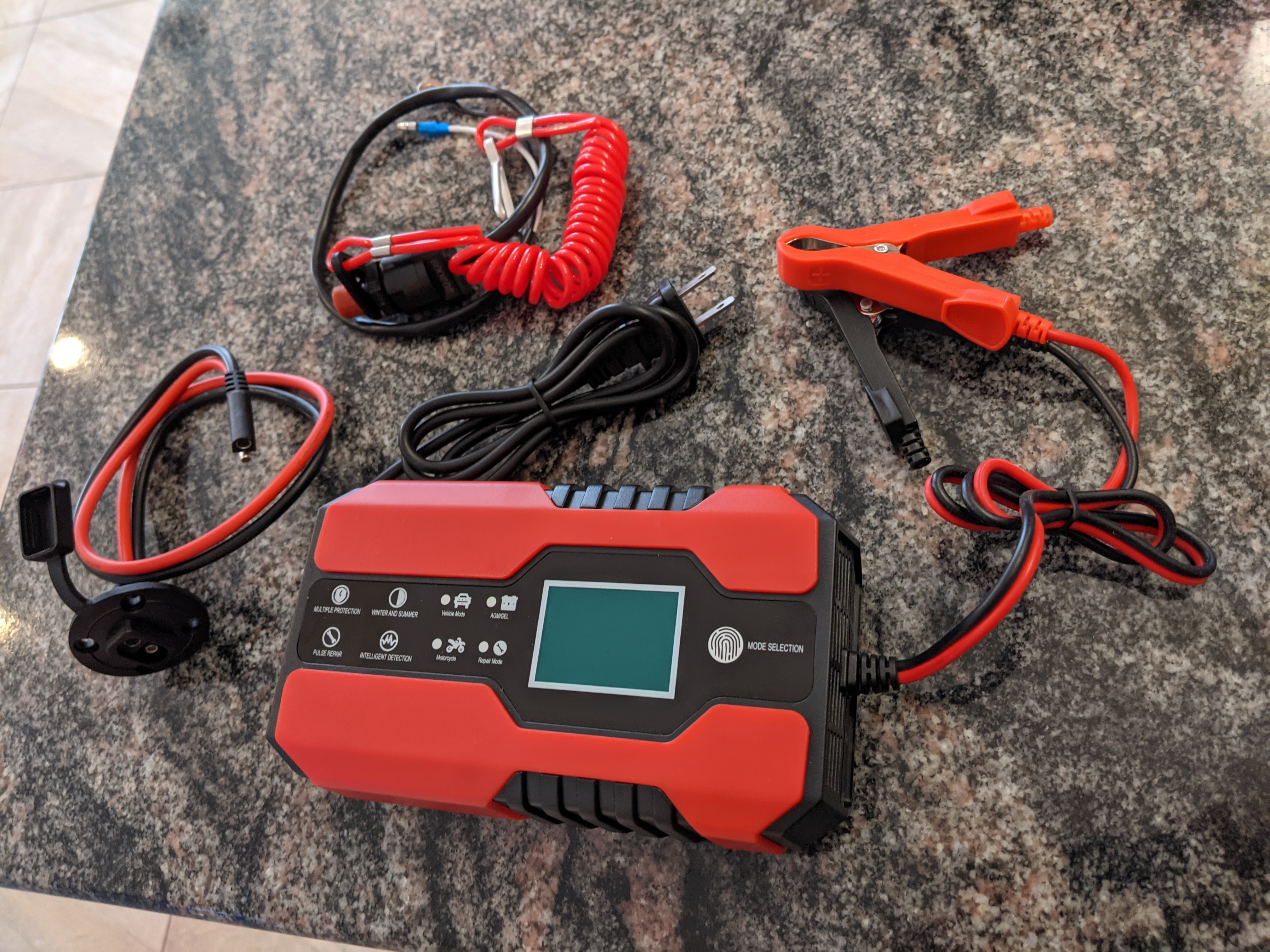
A few nights ago I had a thought. Jet skis have a little wrist strap that is attached to a kill switch. I could use something like that. Found one on Amazon. My wife also tells me the treadmills at gyms have similar switches, but I can’t imagine what these are for. Have a nice spot on the dash and I think this is my solution. Should be able to wire it into the forward / reverse / neutral switch.

Also had some thoughts about charging. Right now the plan is to use a little 12V trickle charger one each battery as necessary. A bit clunky. I see Amazon has a smart 12V / 24V charger that would be nice. Tried it out and it seems to do the job. For now I’ll just use the clips, but installing a port is an option.

On the blades: today I’m thinking four blades on one piece of 2″ PVC pipe. Put them as close as possible and then offset it a few degrees so that there is some overlap when mowing (so there isn’t a stripe of unmowed grass between the blades). I need to think about mounting and controls. The deck up / down mechanism is pretty heavy duty and probably overkill. Probably time to buy the motors, blades and PVC pipe.

Oh, found a site that makes an adapter that I ought to be able to use for direct drive, eliminating the chain drive. Should make it very fast (maybe too fast). Not high on my list but will probably eventually try direct drive out. I figure I can always go back to the chain drive.

Mower Dashboard and Early Blades

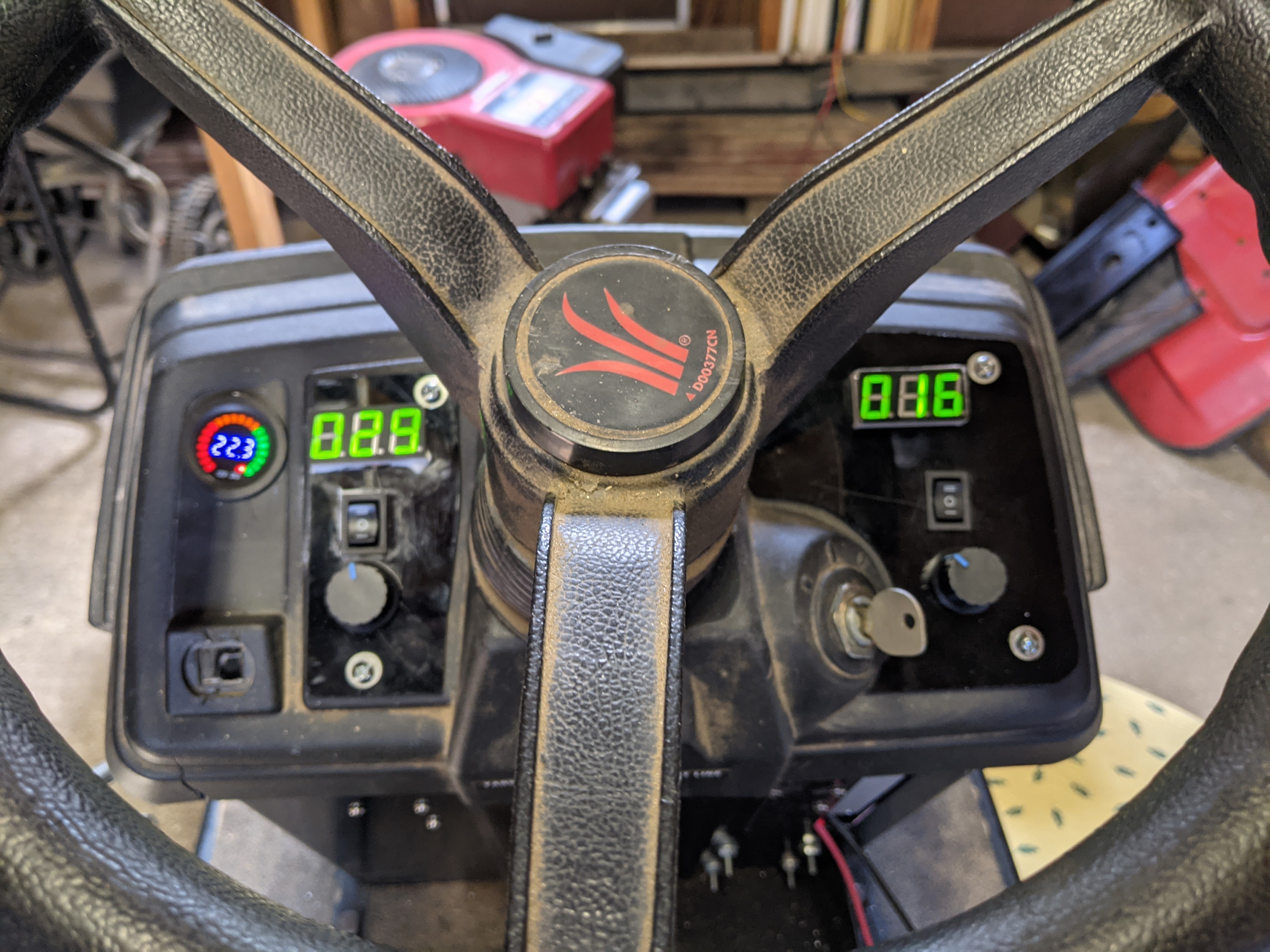
Mounted the controls into the dash. Left side is going to be for the blades, right for the drive motor. A volt meter is on the far left to keep tabs on the batteries. Also found the right PVC part, a 2″ plug, that ought to be what I need to hold the blade motor. Shopping on-line is a bit tougher than being able to root around at the big box stores for parts. Looks like I’m pretty much done with the electronics. Onward to the blades.

Mower Blades

The old mower had two large (19″) blades that weighed in at a couple of pounds each. Since they were spinning at some dangerous speed, they needed a big, heavy (30 lb) deck for safety. And to support all of this there a big heavy pulleys bolted to the deck attached to taut belts that went to the motor. All of this leads to a large, heavy system built like a tank (as they say). I suppose this is good for heavier work, but I’m just mowing a suburban lawn. I am looking to do something smaller and lighter.

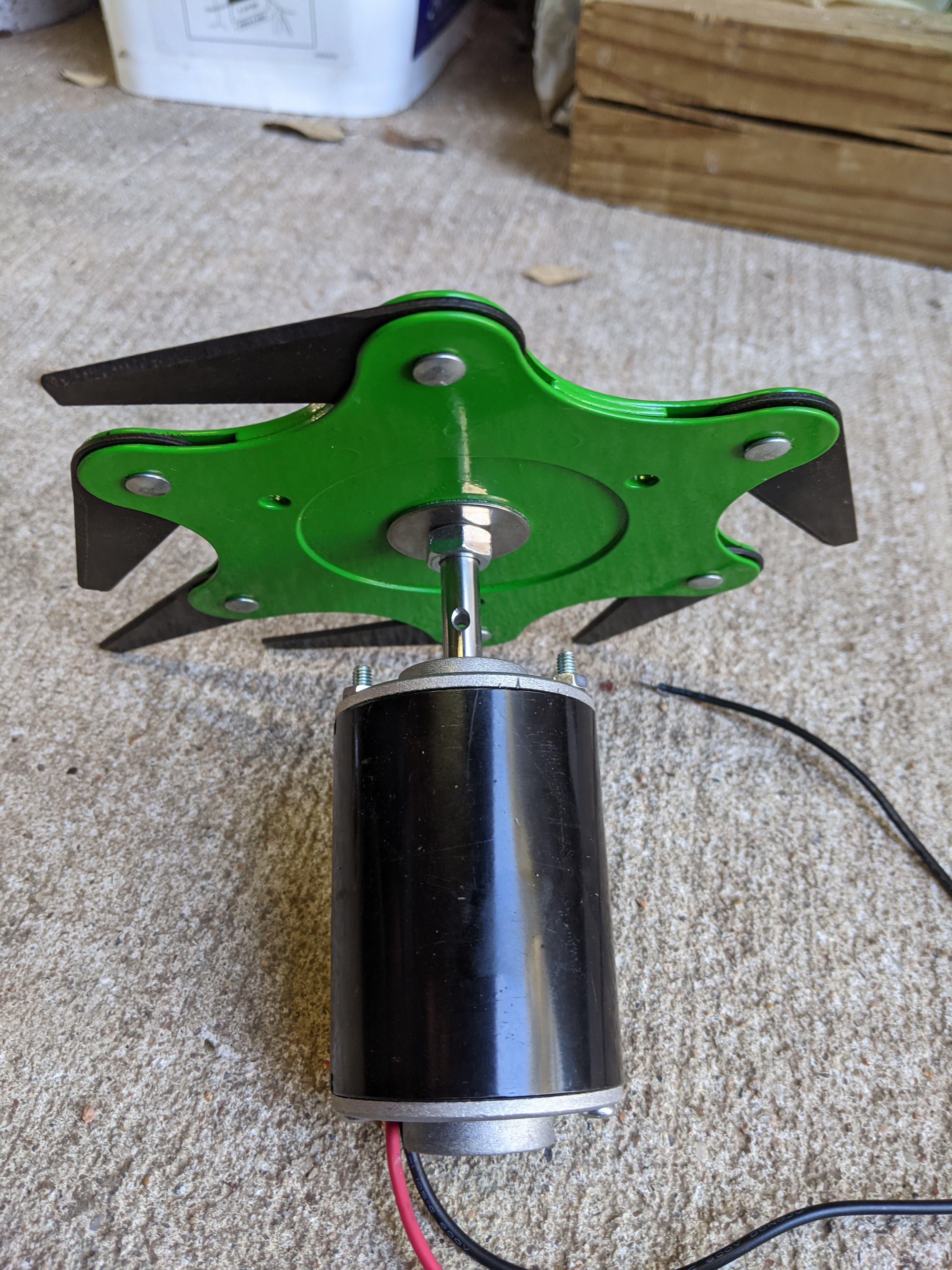
The first thing I found were these little scooter motors. 24V 30W for under $20. Use maybe four of them and for a blade In had a look at some of these heavy duty heads for string trimmers. Lots of these steel string trimmer heads on Amazon for $12.

Attaching the shaft of the motor to the blades is a small problem. Found these adapter kits, but they expect a shaft with more threads. Realized I could just use some standard washers and nuts and be done with it. Also re-learned a lesson about metric vs imperial parts. Seems 5/16″ nuts are darn close to 8mm.

Also noticed the motor fit nicely inside a 2″ PVC pipe. PVC. Might be easier to work with. I drilled a “T” and found out the geometry isn’t quite right. Going to try cutting a bit but PVC pipe might not be the way to go.

Also noticed the old blades were offset. I guess this is how they keep from having an unmowed stripe down the middle in the gap between the two blades. Turns out the deck mounting points were also offset a bit, I suppose to account for the offset blades. I was imagining a simpler right-angle design. Another puzzle to solve.